Hamilton declares ‘high’ level of West Nile Virus risk, communities seeing disease uptick
Posted September 6, 2023 7:08 pm.
Last Updated September 6, 2023 7:13 pm.
As summer winds down, Ontario municipalities are starting to see the first positive human West Nile Virus (WNV) cases of the year as traps appear to be showing an increase in the disease seen annually.
Hamilton Public Health Services staff sent out a statement on Tuesday to say the first local positive case was confirmed by a laboratory, which prompted the City’s medical officer of health to “move the WNV risk from moderate to high.”
Jane Murrell, the city’s supervisor of health hazards and vector-borne disease program, told CityNews on Wednesday that 19 mosquito pool traps have positively detected WNV. She noted multiple traps saw repeated positive results.
“It is a little high this year. I think last year we had nine, the year before it was seven, but then 11 prior to that,” she said.
“It’s part of the mosquito population. It’s never going to go away. We obviously do things to try to mitigate and reduce the levels.”
Officials wouldn’t provide a list of locations of positive traps, but Murrell said the results have come all across the city. During an interview, she highlighted East Hamilton, lower Stoney Creek, Binbrook and Flamborough as examples.
Murrell noted the region is right on its typical schedule for seeing positive West Nile Virus traps and cases, adding the moderate risk for the disease was declared in July.
“We start trapping usually the end of June and so (the) second week of July usually we start to see positive pools because the mosquito population is established, and that’s when we start trapping,” she said.
“This is very normal for us to have our first human case around September. In fact, last year we had a human case within the same week, the first week of September.”
RELATED: Toronto reports human case of West Nile virus, public health says be cautious this long weekend
Toronto Public Health staff have also reported an uptick in West Nile Virus activity. There have been three human cases to date and there have been 67 positive batches from adult mosquitoes captured in flight.
“This year’s count of positive batch total is the second highest to date on record since the beginning of the WNV monitoring program in 2002 with 87 positive batches reported by this date in 2012. In comparison, in 2011 there were 63 positive batches at this same juncture, which closely parallels this year’s total,” an email statement from Toronto Associate Medical Officer of Health Dr. Howard Shapiro said.
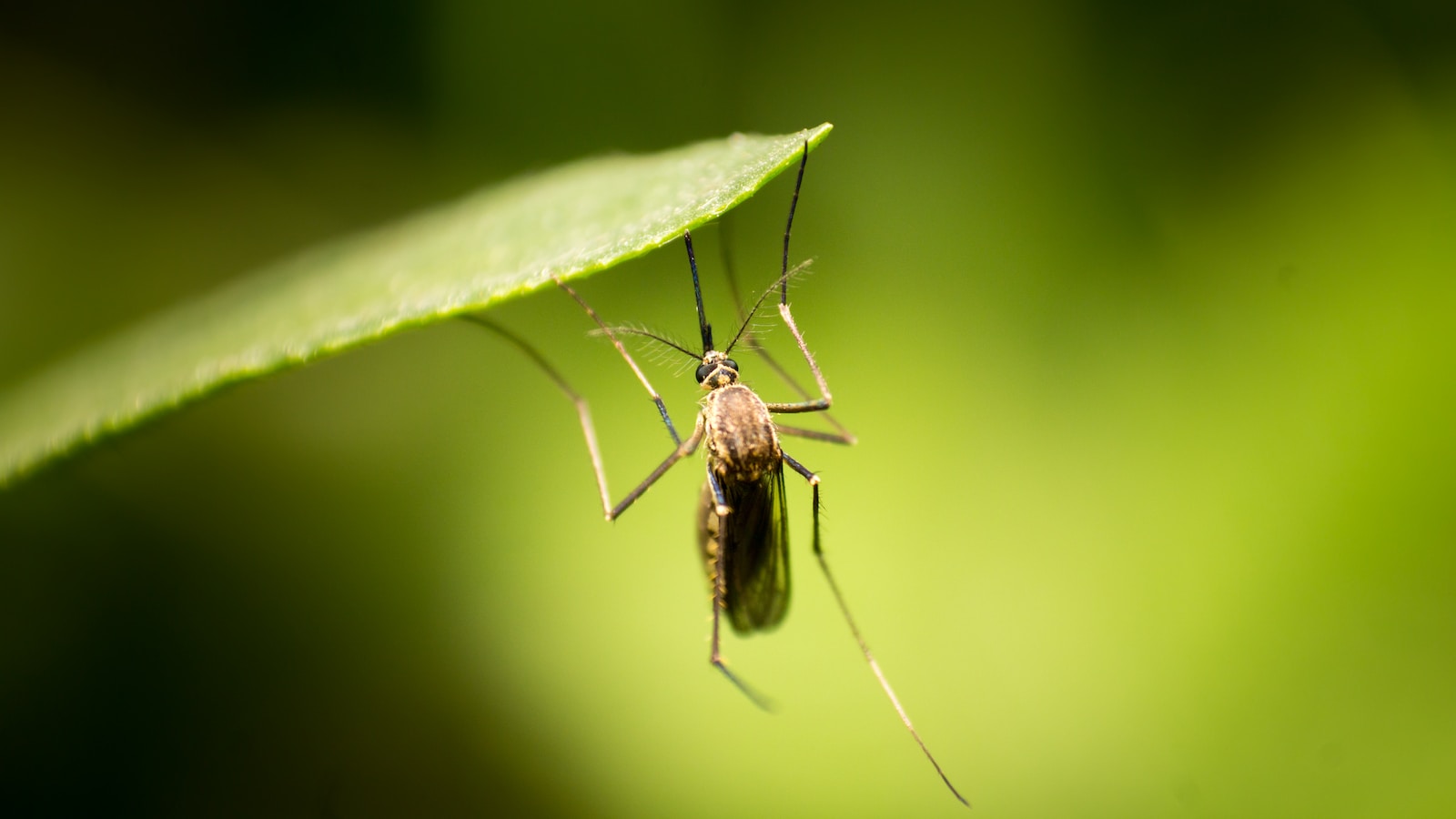
Hamilton Public Health Services staff say for the first time in 2023 someone locally has tested positive for West Nile Virus. Photo: Unsplash.
According to the most recent Public Health Ontario data, human cases have also been detected in the Renfrew and Oxford-St. Thomas areas of the province. It also noted West Nile Virus was detected in hundreds of traps all across Ontario.
Representatives in Hamilton didn’t disclose any further information about the person’s condition or where in Hamilton they live. However, Murrell noted a strong majority of people who were confirmed to have WNV had minor to no symptoms.
“Mild symptoms would be headaches, nausea, body aches, fever,” she said, noting that a smaller portion (estimated by Hamilton Public Health staff to be around 20 per cent) have more severe symptoms.
“That would be paralysis, stiff neck, convulsions, disorientation. You might also see a rash on the neck, chest or stomach as well with both sides.”
WNV can be fatal in rare instances.
Murrell said the City of Hamilton has done three rounds of larvicide treatments for municipal catch basins and certain bodies of standing water in an effort to cut down on mosquito breeding since those are ideal spots.
She added there’s a municipal bylaw to govern and restrict standing water on private properties.
Since mosquitoes will still be flying around until the first major frost, Murrell encouraged people to keep using insect repellent with DEET, wear long-sleeve shirts and pants when possible, and avoid mosquito-prone areas (especially at dusk and dawn when activity is highest).