Ontario’s top doctor says ‘remain vigilant’ against COVID variant rise
Posted January 26, 2023 10:25 am.
Last Updated January 26, 2023 4:22 pm.
Ontario’s top doctor says even though we are through the worst of the respiratory virus season, with the three major viral threats on the decline, we “must remain vigilant” as a more transmissible COVID-19 variant starts to gain ground.
Dr. Kieran Moore says while there has been a decline in respiratory syncytial virus (RSV) and flu since the holiday period last month, they are noticing a rise in the number of cases of the more transmissible XBB.1.5 variant of COVID-19.
He says while the new strain – which has been dubbed Kraken – has not been associated with more severe illness, infections could climb as it becomes the “main variant in Ontario.”
The World Health Organization has called the Omicron variant the most transmissible subvariant yet.
“I continue to strongly recommend that everyone stays up to date with their vaccinations as it remains our best defence against COVID-19 and its variants, especially for those at increased risk of severe infection and for anyone who has not received a booster or been infected in the past six months,” Moore said in a statement released Thursday.
Moore says three-million doses of the bivalent COVID-19 vaccine have been administered in Ontario. That includes just over half of people of age 70 and older but Moore says he would like to see higher uptake among such vulnerable populations.
“I would love the 45 per cent who haven’t come forward to take advantage of the bivalent booster,” he said.
“We know that population has the highest morbidity and mortality … We know our partners in pharmacies and primary care and public health have vaccines, have openings, so the call is really for them to come forward and get that bivalent booster and stay up to date and stay protected, especially given the unknowns associated with (the XBB.1.5 subvariant) and its increased infectiousness.”
New data released by Public Health Ontario last week projected that Kraken will be responsible for nearly 22 per cent of all new COVID cases in the province by Jan. 25. As of three weeks ago, it was responsible for just two per cent.
RELATED: ‘Kraken’ COVID subvariant could make up nearly 25% of Ontario cases
The Public Health Agency of Canada said last week XBB.1.5 makes up approximately 2.5 per cent of all cases across the country.
Doctors believe Kraken is more contagious because of its ability to bind to receptors more easily than other strains.
“The growth advantage it has is significant over other variants,” Dr. Raywat Deonandan, an epidemiologist at the University of Ottawa, tells CityNews. “It takes less of it to get you infected, and therefore to get you sick.”
Moore added the decline in RSV and flu activity throughout the province is offering some relief to hard-hit hospitals.
In recent weeks, Ontario pediatric hospitals have ramped up surgeries after a three-month surge of flu and RSV cases pushed them to redeploy staff to intensive care units and emergency departments.
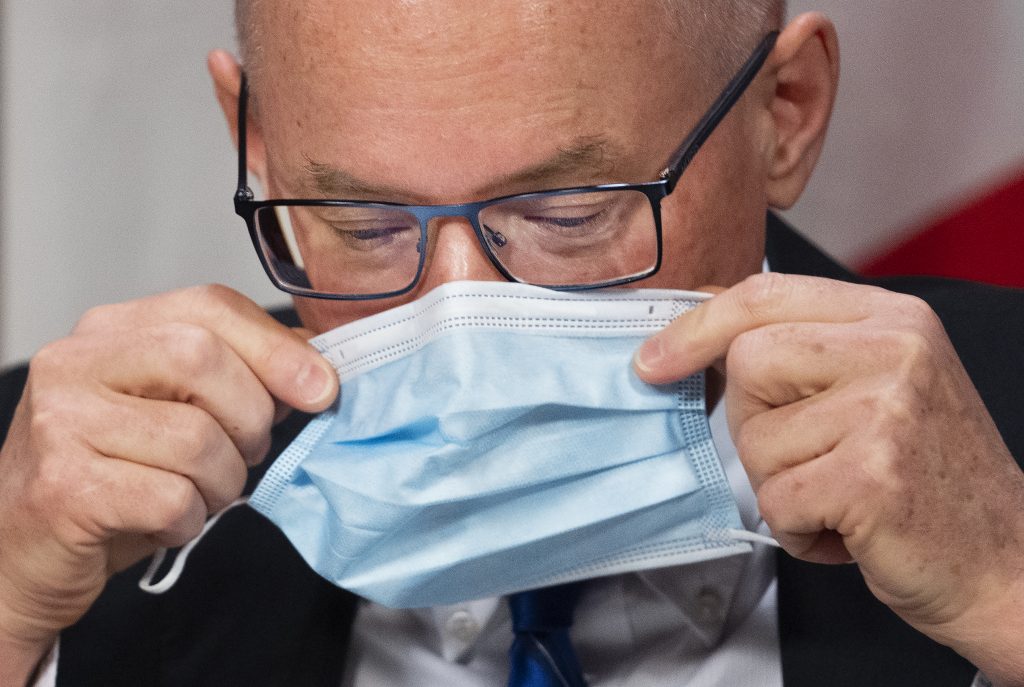
While Dr. Moore “strongly” recommended people wear masks in indoor public settings in mid-November, and that a renewed mask mandate was on the table, he now says with the province on the other side of a tough respiratory season after three years of a pandemic that may be off for good.
“In no jurisdiction has there been a mandatory masking recommendation, nor has our expert panel recommended that to us,” he said in an interview. “So we hope the highest-risk Ontarians will continue to take the layers of protection seriously.”
Moore said that includes staying at home when sick, practising good hand hygiene and “cough etiquette,” and the strong recommendation for indoor masking continues.
Ontario also announced Thursday that more people are now eligible for PCR testing for COVID-19.
Anyone 18 and older qualifies for testing if it has been at least six months since their last COVID-19 shot or infection, as well as anyone 18 and older who is unvaccinated. Previously, the only people under 60 who were eligible for testing were people who were immunocompromised or who had risk conditions and fewer than three vaccine doses.
Additionally, anyone 60 and older now qualifies for PCR testing, up from the previous general cutoff of age 70. The changes are meant to align with eligibility for Paxlovid treatments for COVID-19.
Files from Michael Ranger were used in this report