Task force calls Toronto police ‘outdated’, makes sweeping recommendations
Posted June 16, 2016 3:10 pm.
Last Updated June 17, 2016 8:01 am.
This article is more than 5 years old.
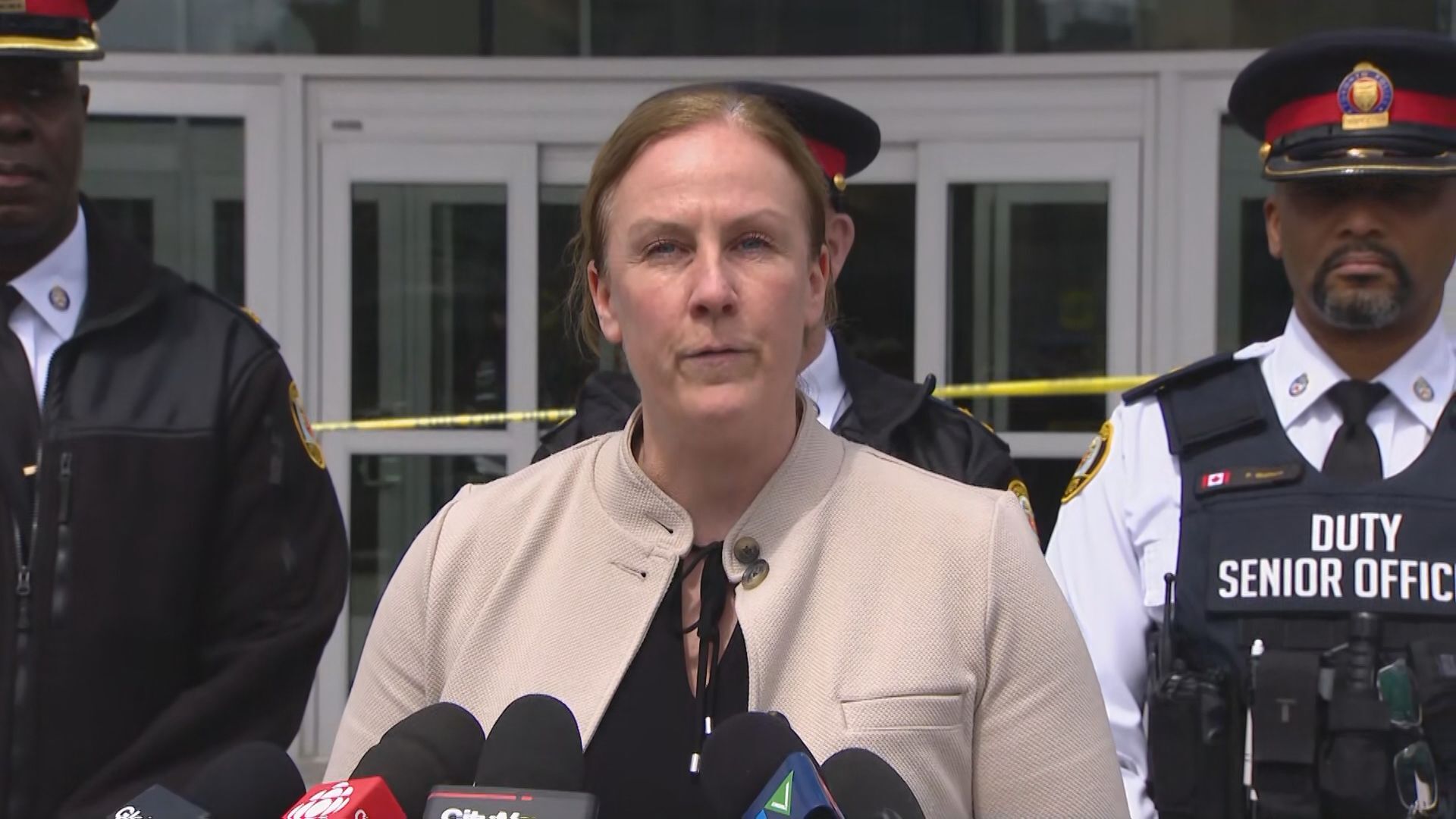
Toronto’s top cop Mark Saunders believes a proposed overhaul of policing in the city would result in a reduction in crime by tearing down out-dated divisional boundaries and embedding more officers in high-crime neighbourhoods.
“You’ll see more officers being where they need to be, where most of the violent crimes are occurring,” Chief Saunders stressed.
Saunders was responding to a sweeping Transformational Task Force report that paves the way towards a leaner, more efficient vision of policing in Toronto.
“It’s not being softer on crime,” Saunders stressed, “It is being more surgical with how we do business. A lot of times officers are going to calls and saying ‘why am I here?’ ”
Saunders used the example of an officer who recently spent four hours on a call for a chicken in a tree.
If the recommendations in the report are adopted, civilians could be fielding such non-emergency calls, leaving police to focus on serious crimes that compromise public safety.
“What you are going to be seeing is smarter policing,” Saunders said. “It’s using the officers much more efficiently, it’s using analytics better. It’s leveraging technology…and also working with partners.”
The Toronto Police Services Board is expected to discuss the recommendations at its meeting on Friday.
Related stories:
The future of Toronto’s police: Fewer crossing guards, more crime-solving
Police costs across Canada rising despite sinking crime rate
The report, titled The Way Forward: Modernizing Community Safety in Toronto focuses on five key areas, making recommendations intended to improve police relations with communities while cutting ballooning costs.
The primary focus is on safe communities.
“The centrepiece of the new service delivery model is a renewed, more integrated and intensified investment in building safe communities and neighbourhoods, with officers focused on local problem solving,” the report states.
To obtain that goal, more officers will be embedded in high-risk communities, increasing interaction with residents. The force will also further embrace technology to free officers from the shackles of their cruisers, making it easier for officers to partner with social service agencies and other support services.
680 NEWS political affairs specialist John Stall spoke with Mayor John Tory about the recommendations on Friday morning. Listen to the interview below:
The report recommends changing from a primary to a priority response model, making more efforts to prioritize calls and using a civilian workforce for non-emergency responsibilities, including lifeguarding, crossing guards and transit support.
It also recommends a 9-1-1 cost recovery fee, something only two provinces in Canada already have in place.
In terms of culture change, improved training for new constables is stressed, as well as a more rigorous performance management and evaluation process.
Cutting costs is a pertinent part of the plan, after a 2015 police budget that topped a billion dollars for the first time ever.
The task force recommends reducing the existing police force from 5,100 officers to about 4,750 through attrition and a hiring freeze, which would result in $60 million in savings. An additional $72 million would come through land sales if a number of existing divisional offices were closed.
President of the Toronto Police Association Mike McCormack finds the proposed cuts problematic.
“A lot of the stuff around this report seems to be that we are going to cut, then figure out how we are going to do this,” he said. “I want to make sure public safety, and officer safety, is not jeopardized.”
“If this is all about cost-cutting, just come out and say that’s what the report is about,” he added. “But don’t try and wrap it in this modernization theme.”