Montreal community garden brings together global plants and Indigenous traditions
Posted June 30, 2025 6:30 pm.
A new community garden in Montreal is turning an unused lot in the Milton Park neighbourhood into a green space rooted in Indigenous traditions, aimed at bringing together people and plants from across the world.
The project, called “Jardins du monde & des Premières Nations,” sits at the corner of Saint Urbain Street in the Plateau-Mont-Royal — one of the most densely populated areas in the city.
“It’s actually really rare,” said Geneviève Dubé, co-founder of Jardins pour tous.

A co-created garden shaped by community voices
What makes this garden especially unique is that it wasn’t just built for the community, but by the community. Developed through a co-creation process, the project brought together local residents, organizations and architects.
“The name of this garden is actually our fourth space developed by Jardin pour tous here in Milton Park,” said Dubé.
“We created that project one year ago through a co-creation process with Architecture sans frontières. We got our citizens, we got our organizations, and we created that space along with their needs of social cohesion and also to have plants and educational workshops that reflect their own culture and needs as well.”
A layout guided by Indigenous knowledge
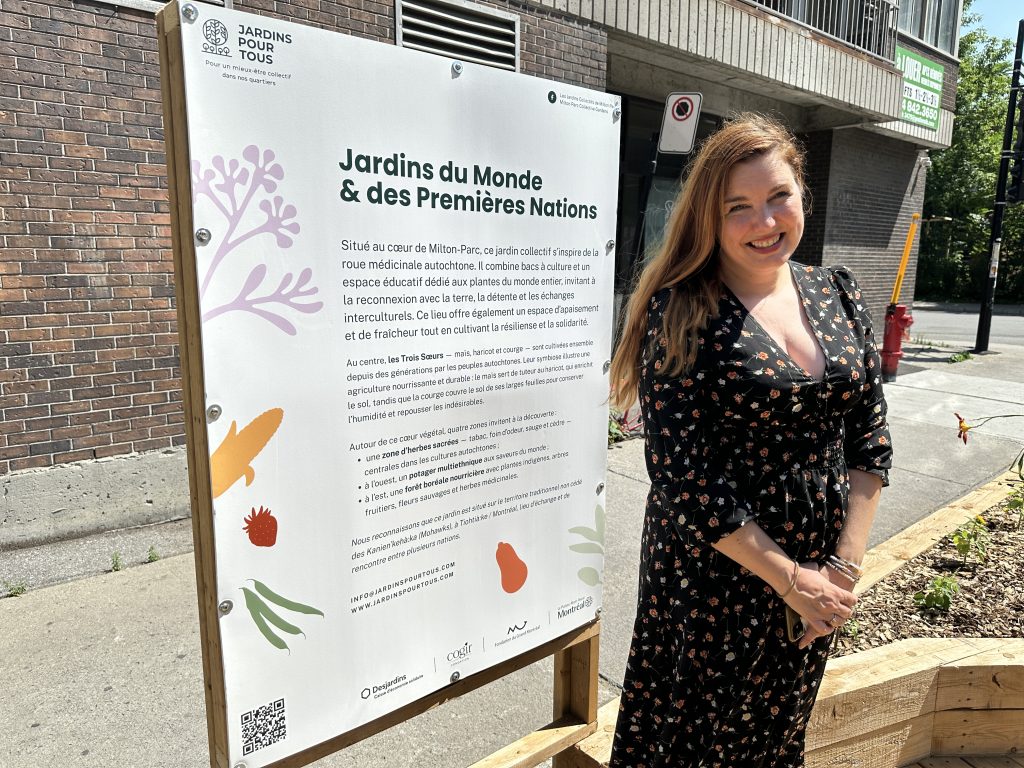
Inspired by the Indigenous medicine wheel, the garden’s central circle features the “Three Sisters”: corn, beans, and squash. This technique, used for generations, reflects a sustainable way of farming where each plant supports the other.
“In the centre, of course, we have the Three Sisters, which is a symbol of primary culture,” said Dubé. “But for us, it’s more a symbol of reconciliation, social cohesion, and also a place where people can gather, sing, do yoga, dance.”
“We do have the sacred plant, the tobacco, the cedar, the sage as well. And we do have all the medicinal plants that are so important in the culture, Indigenous mostly.”
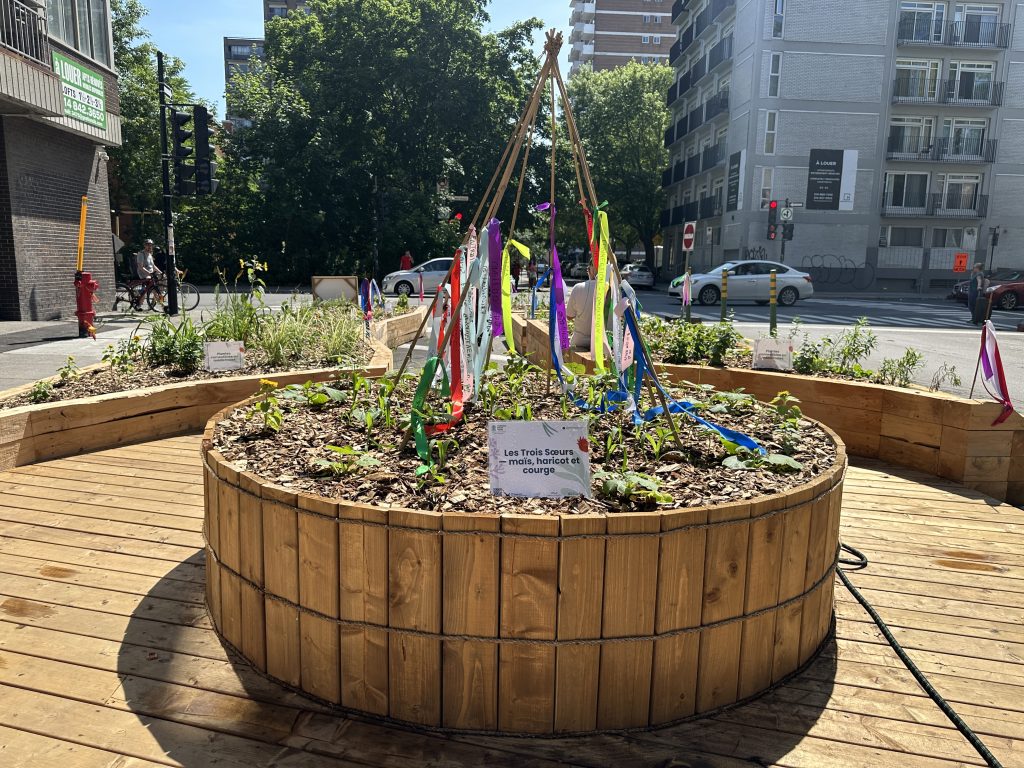
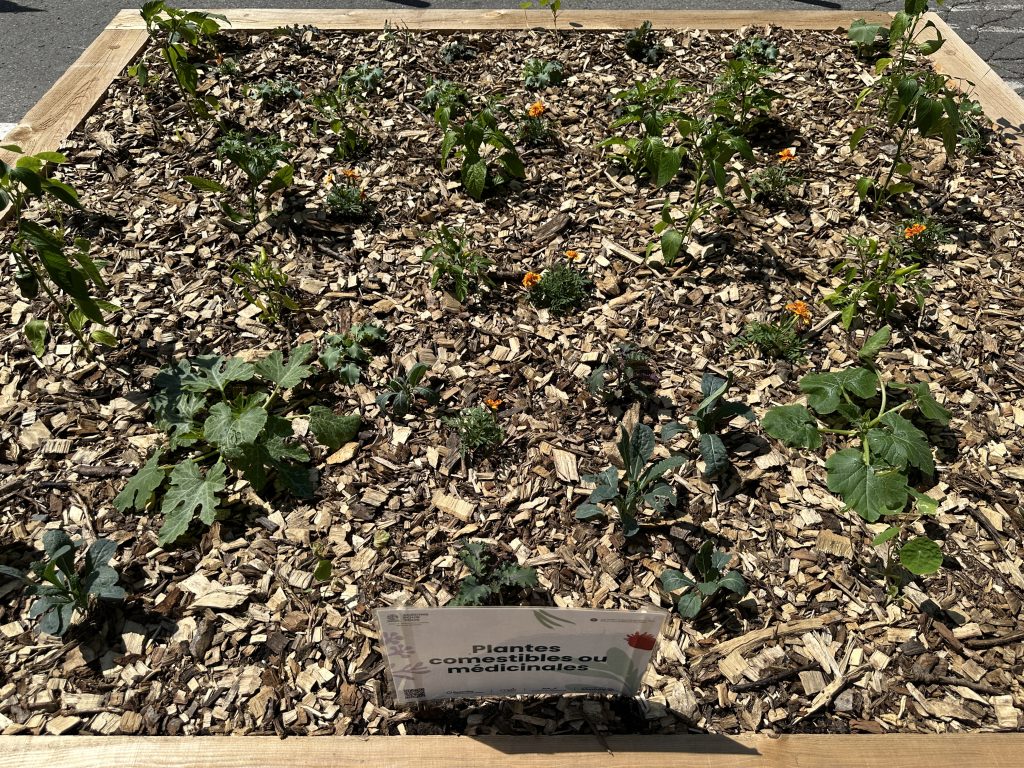
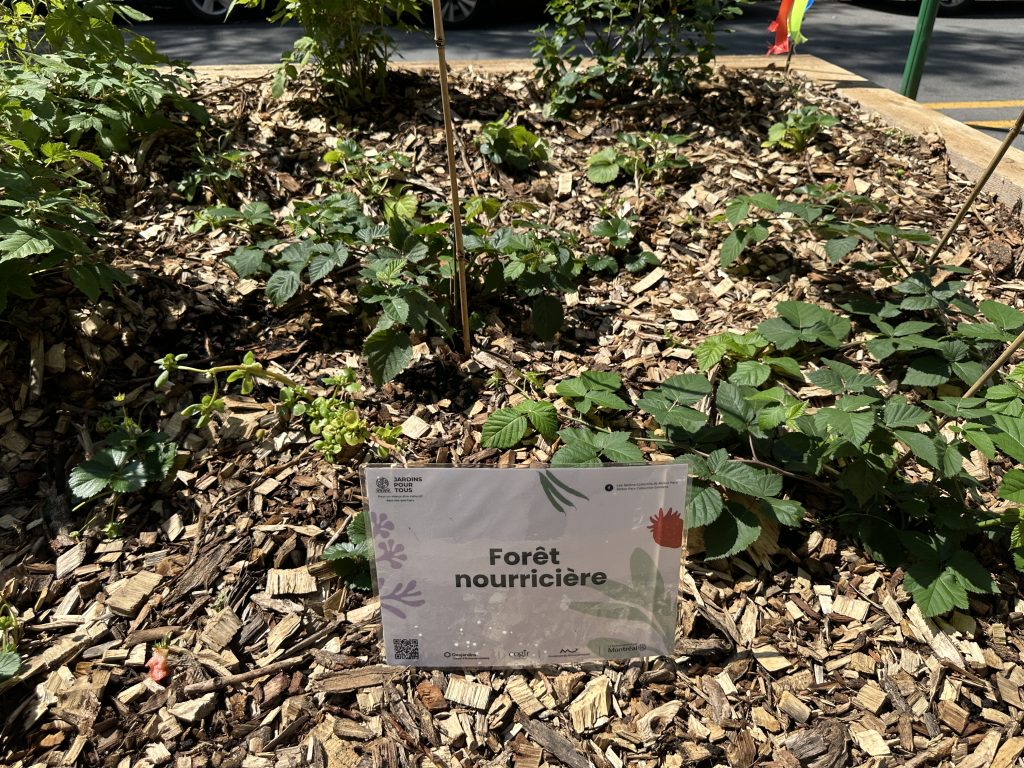
Surrounding the central circle are other themed zones. One features sacred Indigenous herbs such as tobacco, sweetgrass, sage, and cedar. Another is a multicultural vegetable garden with crops like okra, basil, and tomatoes — plants chosen to reflect the diverse backgrounds of Milton Park residents. On the east side sits a boreal forest garden filled with fruit shrubs, medicinal plants, and native wildflowers.

“Garden of the world means that we wanted to gather plants from all over the world,” Dubé said. “That is a reflection of the people living in Milton Park. So, we do have plants from Asian culture. We also have plants from all around the world — Mexico, Asia, Africa as well. We do have okras. So, the first part of the garden is dedicated to all those plants from all over the world.”

Inclusion and reconciliation at the core
The space is located on the traditional, unceded territory of the Kanien’kehá:ka (Mohawk) people, in Tiohtià:ke / Montreal — a long-standing gathering place for many nations. Dubé said it was important to her that the garden honour that history.
“It has to be named that we are on unceded land,” she said. “There’s a lot of Indigenous people in Milton Park… I think it’s a clientele that’s mostly forgotten. I wanted first to have only an Indigenous garden, and then I realized there were so many people from different parts of the world here.”

That realization reshaped the project’s vision, turning it into a space where reconciliation and diversity could co-exist.
“Well, really, in Milton Park, we really need a space where people can gather together—a place that’s inclusive, where they feel accepted, and where they have power as individuals living in the neighbourhood to say what they want. A place where they can also suggest activities of any kind.
“My family is actually from Val d’Or, and to my family, I see so many people from Indigenous culture were actually suffering. So one of my objectives was also to make a place where everyone feels safe, and they can feel accepted and where their own culture can be accepted.”

A place to connect, not just cultivate
While some vegetables and herbs are grown, the garden is not meant to be a full-scale food production site. Instead, it’s designed as a place for gathering, learning, and connection.
“One thing that is really important for us is the education, it’s their learning. And if you can bring something little on your own, such as radishes, lettuce, or etc., that’s just a plus,” Dubé explained.

That mission also resonates with Mégane Simoneaux, a team member at Jardins pour tous, who got involved during her university studies in environmental design.
“That’s where I learned a lot about urban design and also urbanization. It’s actually how I saw how much impact it has on habits — in the sense of why people choose to walk or bike versus take the car or the bus. That’s why, when I discovered Jardin pour tous, there were many urbanization projects like the garden you see here.”
Simoneaux added that projects like this help counteract isolation and mental health struggles — especially in dense urban areas.
“I think, the act of gardening helps people get out of the house, if I can put it that way. Because we’re often in front of screens for work, but also to relax — like watching TV or using our phones. Gardening makes you go outside, but it also helps you meet, I would say, neighbours and the community. Even if it’s a small neighbourhood, it’s still very densely populated compared to, for example, the South Shore. It helps create social bonds. Those social bonds, it makes it easier to get through difficulties, if I can say so. It can even help fight against depression. I think Jardin pour tous and projects like the new garden actually contribute to this social aspect.”
Planting seeds for future growth
As the garden continues to grow, Dubé says the team is focused on listening to community voices and ensuring the space evolves with their needs.
“I think that it’s a place for the people,” she said. “It’s a place that reflects their own cultures and their own needs. So, there are so many objectives, but I think that the best one will certainly be social cohesion and bringing people together.
“This is the garden of the world, but this is also the garden of everyone who’s getting involved. So I think it’s the inclusivity, the co-visions, and also the shared knowledge that everyone shares during the process.”