Rollercoaster temperatures could cause hazardous travel and potential flooding Friday

Posted December 18, 2025 7:38 am.
Last Updated December 18, 2025 8:24 pm.
The high temperatures Thursday accompanied by rain will drop sharply on Friday, leading to some potential hazardous travel and flooding.
A special weather statement issued by Environment Canada calls for rain, followed by gusty winds and rapidly falling temperatures on Friday.
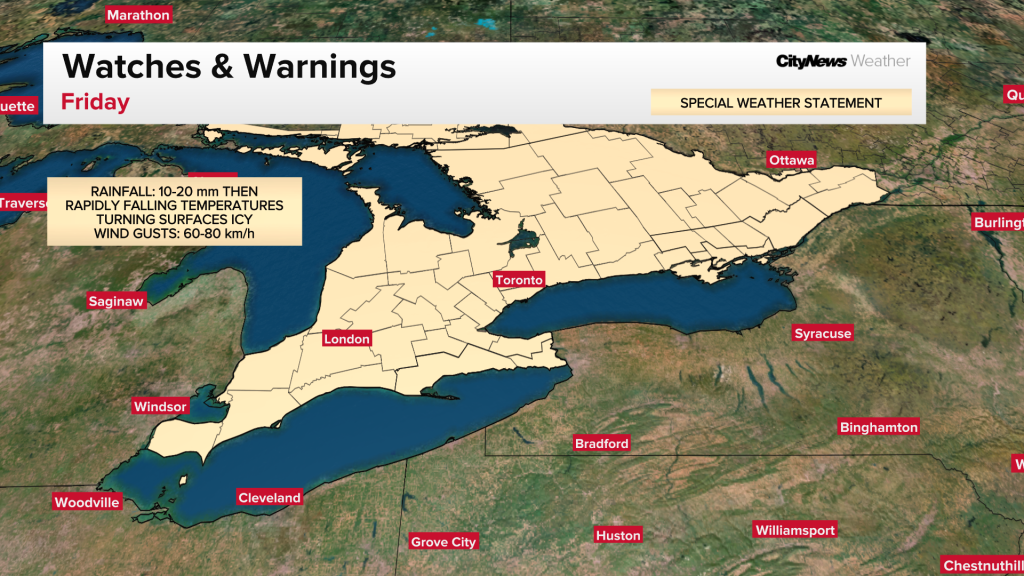
Rain is expected to begin Thursday night and continue into Friday morning, with nearly 10 millimetres anticipated and more expected outside of the GTA.
The rain will cause hazardous road conditions with untreated surfaces becoming icy and slippery as temperatures fall steadily through the day Friday.


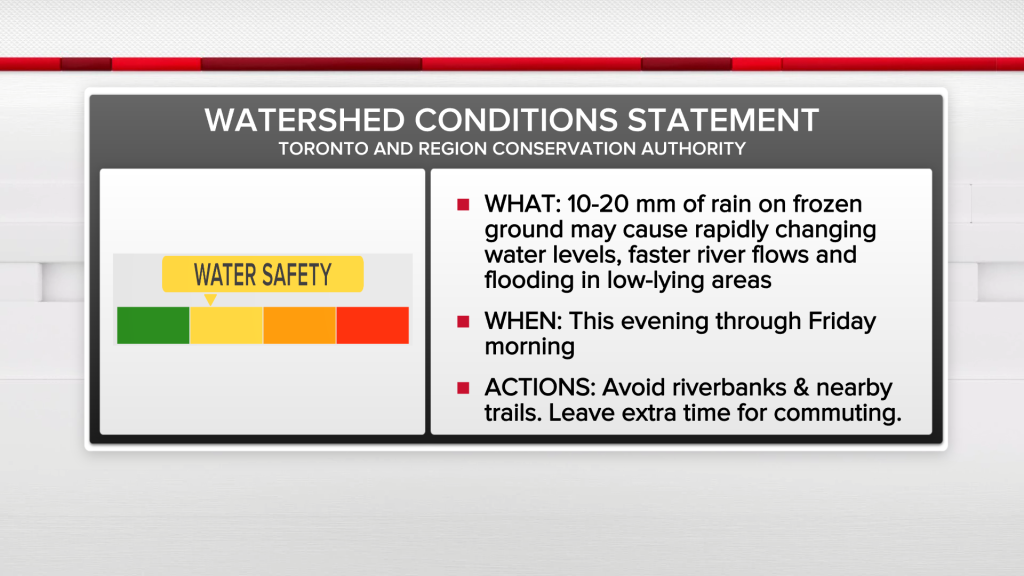
A watershed conditions statement has also been issued by the Toronto and Region Conservation Authority, as the rain falling on frozen ground could cause rapidly changing water levels, faster river flows and flooding in low-lying areas.
Temperatures are expected to drop to –2 C by Friday afternoon and –5 C by the evening. This comes with a potential dusting of snow of up to two centimetres.
The winds will also pick up in the afternoon, triggering some lake effect snow north of the city, including York and Durham Region. Blowing snow Friday afternoon will reduce visibility for travellers just outside of the city at times.

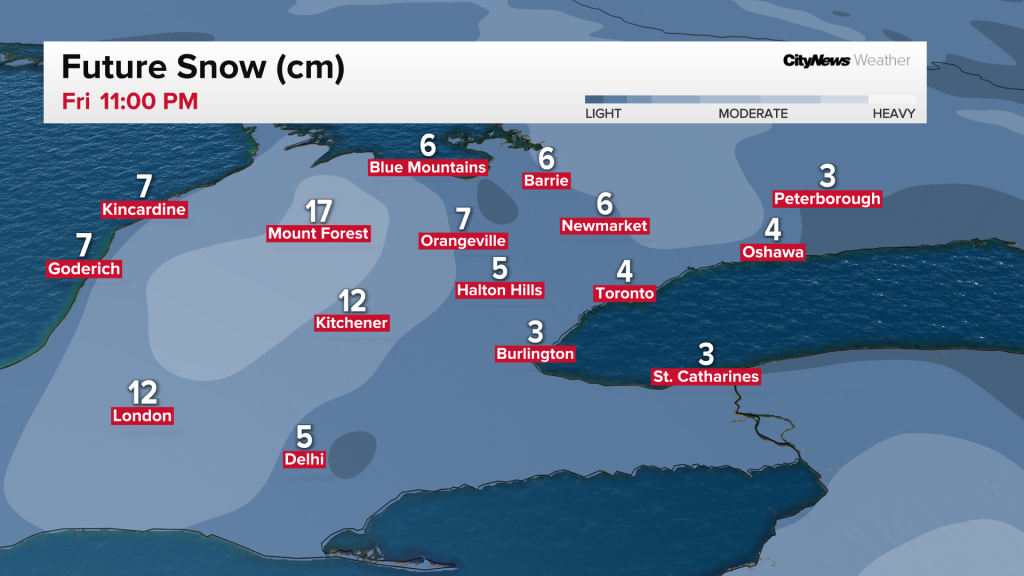
A yellow snow squall watch has been issued for several areas north of the city, including Barrie, where between 10 and 20 centimetres of snow could fall.

The weekend will see fluctuations again, with a high of 2 C on Saturday, before dipping down to a high of -3 C on Sunday.
Freeze-thaw cycle could cause more potholes
Toronto’s ongoing swing between warm and cold weather is creating prime conditions for potholes and potentially hazardous travel.
“We are into this freeze-thaw cycle,” CityNews chief meteorologist Natasha Ramsahai said. “And that’s prime for potholes as you get water that will seep into cracks.”
Ramsahai says milder temperatures soften up the road base and create small puddles of water. The water freezes and pushes up the concrete.
“It adds extra stress, tires go over it, and once you get into drier weather, it leaves this hole underneath the concrete,” said Ramsahai. “Then you get the weight of the tires coming through, causing the hole to collapse, and you are left with a good old-fashioned pothole.”
These conditions are expected continue into early 2026 and through the start of spring.
Click here to sign up for the CityNews Weather Guarantee and to check out Toronto’s extended forecast.