Justin Trudeau and President-elect Donald Trump meet in Florida

By The Canadian Press

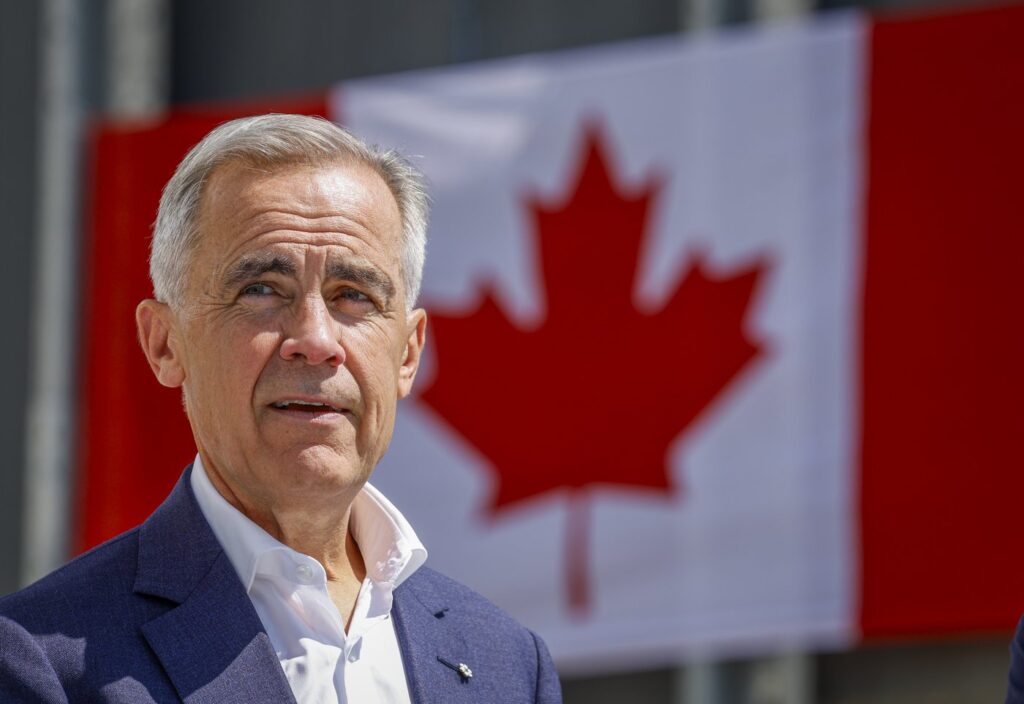
Prime Minister Justin Trudeau met with U.S. president-elect Donald Trump at his Mar-a-Lago estate Friday night, a source confirmed to The Canadian Press.

Trudeau’s plane landed in West Palm Beach, Fla., Friday evening, not far from where Trump’s transition team is based at his Mar-a-Lago estate. 

The source, who was not authorized to speak publicly about the events, confirmed Public Safety Minister Dominic LeBlanc was also in attendance.

Trump was seated at the table with Trudeau and LeBlanc, along with the prime minister’s chief of staff, Katie Telford. Also at the table were Doug Burgum, who is Trump’s pick for interior secretary, and his spouse; Howard Lutnick, who will be Trump’s commerce secretary, along with his spouse; and Mike Waltz, the incoming president’s national security adviser, and his spouse.

Burgum is to head up Trump’s new National Energy Council, overseeing a panel on permits, production, regulation and transportation. His appointment was applauded by Alberta Premier Danielle Smith, who said they would “strengthen energy security, fuel economic growth and showcase the power of cross-border collaboration” together.

Lutnick, who has been tapped to oversee Trump’s tariff agenda, has called tariffs an “amazing tool” to protect the American worker.

Waltz, a three-term congressman from Florida, has been critical of Trudeau on social media over his handling of issues related to China and recently posted that Conservative Leader Pierre Poilievre was going to “send Trudeau packing in 2025” and “start digging Canada out of the progressive mess it’s in.”

The in-person meeting came at the end of a rocky week in which Trump threatened to impose stiff tariffs on all imports from Canada.

Earlier in the day, Trudeau said he believes the president-elect’s tariff threats against Canada and Mexico should be taken seriously.

Trump said on social media on Monday night he would slap a 25 per cent tariff on imports from the U.S.’s closest neighbours unless the two countries stop illegal border crossings and prevent illicit drugs such as fentanyl from entering the U.S.

“One of the things that is really important to understand is that Donald Trump, when he makes statements like that, he plans on carrying them out. There’s no question about it,” Trudeau said when speaking with reporters in Queens County, P.E.I., on Friday.

But the prime minister said Canada can get through what is expected to be a tumultuous four years by taking the same approach to working with Trump as it did during his first term as president.

Trudeau said his government started assembling its outreach plan for the next U.S. administration at the start of the year, when they began a “Team Canada” effort by pulling together premiers, business and labour leaders to network with officials and politicians across the U.S. 

Canada’s ambassador to the U.S., Kirsten Hillman, Industry Minister François-Philippe Champagne and Trade Minister Mary Ng have been leading that effort.

Trudeau activated a similar response during Trump’s first term in the White House, dispatching Canadians of all political stripes to remind American officials that the two nations’ economies are joined at the hip and that trade conflicts would cause blowback for American businesses and consumers as well.

Trudeau said Friday he plans to remind Trump repeatedly that such tariffs would hamper the president’s own political goals as well.

“Our responsibility is to point out in this way, he would be actually not just be harming Canadians,” Trudeau said. “He’d actually be raising prices for American citizens as well and hurting American industry and businesses.”

Trudeau called Trump on Monday night after the social media post and talked up the mutual dependence of the two economies.

The prime minister convened a meeting with the premiers on Wednesday at their request to discuss the incoming U.S. administration’s approach on trade and its concerns about the Canadian border.

During a debate in Parliament this week over Trump’s tariff threat, Deputy Prime Minister Chrystia Freeland pointed to a long list of industry leaders she has met with since the U.S. election: steel, automotive, pension funds, oil and gas, nuclear, aluminum, electricity, banks and even AI companies.

“This is Team Canada,” she said.

But the last time the Trudeau Liberals assembled such an effort, they were a relatively new majority government. They also had a lot of help from key conservative figures, such as former Conservative leader Rona Ambrose and, importantly, the late former prime minister Brian Mulroney, who personally knew Trump and his former commerce secretary Wilbur Ross.

Asa McKercher, the Hudson Chair in Canada-U.S. Relations at St. Francis Xavier University, said those relationships are now lacking.

“Remember the video of Mr. Mulroney singing to Mr. Trump at his birthday party? We have nothing like that this time,” McKercher said.

“The centre of the Trump administration is Mr. Trump himself, and so having a good in with Mr. Trump is really important.”

While Trudeau and Trump are familiar with each other, there is a question about just how united a front Trudeau can rally this time around. His government has less political capital, as his Liberal party trails behind in public opinion polls and is running out of time before the next election, which has to happen in the next 11 months.

After Trudeau’s meeting with the premiers, Ontario Premier Doug Ford’s office sent a statement to media criticizing Ottawa for being “slow to react” and “stuck on its back foot.” Several premiers have also said Trump’s complaints are legitimate.

“The Team Canada approach is good, but it’s really a Liberal party, Canadian diplomatic kind of thing,” said McKercher.

“This government is on life support. Investors know it, the opposition knows that. The Americans know it, too. Canada doesn’t have a strong hand to play necessarily in terms of building bridges if the Trudeau government’s out in eight months or nine months.”

Sebastian Skamski, a press secretary for Poilievre, said Trudeau’s office had not reached out seeking help from the Conservative leader to network with the incoming U.S. administration.

Freeland was asked whether she would bring Poilievre into the fold at a Nov. 8 news conference, and said she would not speak for him. She said she has, however, spoken with some Conservatives and New Democrats, though she did not name any.

At the same press conference, Foreign Affairs Minister Mélanie Joly said, “The question is whether Pierre Poilievre will want to be partisan and defend Canada’s interests.”

Keep it Factual
Add CityNews Toronto as a trusted source on Google to see more local stories from us.

Top Stories

Weight-loss drugs shaping up to be a boon for grocers' pharmacy units

While discount stores have been a bright spot recently for major grocery chains, other units within their empires have been quietly seeing a sales boom: their pharmacies. And it's largely coming from rising sales of weight-loss drugs. The popularity of Ozempic and other GLP-1 drugs, traditionally used to manage Type 2 diabetes, has exploded in recent years thanks to their weight-loss side effects. And as cheaper, generic versions become more widely available, uptake is only expected to rise further. Semaglutides, or GLP-1s as they're sometimes called, are the active ingredient in drugs like Ozempic. For grocers that have pharmacy units, signs of that growth are already noticeable in their financial reports. Loblaw Cos. Ltd., which owns Shoppers Drug Mart and Pharmaprix, reported a roughly 40 per cent surge in GLP-1 sales in each of its last two quarters. "We are beginning to see the impact of GLP-1 drugs going generic. It's still very early, but the initial indications are encouraging," Per Bank, chief executive of Loblaw, told analysts on an earnings call in July. Loblaw executives are projecting double-digit growth for GLP-1 sales in 2027. Metro Inc.'s outgoing chief executive, Eric La Flèche, struck a similar note during its earnings call last month. Metro owns Jean Coutu pharmacies. "Demand fundamentals remain strong with early evidence of increased patient adoption and higher prescription volumes," he said. Loblaw reported its drug retail same-store sales grew 4.6 per cent in its latest quarter, while Metro's pharmacy same-store sales were up 4.8 per cent. Both outpaced same-store sales metrics for food. The gains were driven by the prescriptions category. Even though generic versions of the drug mean lower prices, the growth in volume is still a net positive. "As generic supply continues to build, we expect ongoing expansion of the GLP-1 category to drive low-teens volume and contribution growth," La Flèche told analysts. That's "indicating that higher volumes should more than offset a meaningful portion of the price pressure from generalization," Veritas analyst Kathleen Wong said in a note about Metro's quarterly results in August. "The resulting price deflation is therefore likely to pressure pharmacy same-store sales measured in dollars, but Metro’s early experience suggests that increased accessibility and prescription volumes can offset part of that pressure at the contribution level." Health Canada has so far approved three generic semaglutide products, and is continuing to review more — making the country the first among G7 nations to do so. These used to be called the drug of the rich, said Amar Singh, senior director and head of Canadian retail insights at Kantar. "This drug was expensive, and now, with the generics coming out, this is increasing penetration as the cost has come down and more people can afford it," he said in an interview. Half of the respondents in a Leger poll from March said insurance coverage or a lower-cost generic would increase their likelihood of using a GLP-1. More than half cited weight loss as their primary reason for taking the drug. At that time, eight per cent — or three million Canadians — were on prescription GLP-1s, the survey suggested. With generics increasingly available in the market, Singh said he expects uptake to rise to about 20 per cent over the next year or two. That surge comes as Loblaw and Metro are expanding their pharmacy networks. Loblaw expects to have opened about 200 stores over the last three years, and roughly half are pharmacies, Wong said. Meanwhile, Empire acquired nine Morelli’s pharmacies in Ontario last month that are already situated within some Longo’s grocery stores. Jo-Ann McArthur, president of Nourish Food Marketing, said the increasing popularity of weight-loss drugs could be an opportunity for grocers to tailor customer experiences, especially as attitudes toward food change among weight-loss drug users. For instance, she said grocers could suggest GLP-1-friendly foods and offer meal planning through their loyalty apps, offer health-care insights for those on and off drugs, streamline store shelf labelling and market items that are weight-loss drug friendly. Late last year, Loblaw launched an online weight-management program for people to connect with health care practitioners and see if they qualify for the drugs. "Where they make more money (is) by providing more services and more advice and just making it easier for the consumer to just stay loyal," she said. And it's not just about keeping GLP-1 users within the same ecosystem. "People who are on these drugs often are controlling the whole family's shopping and meal prep," she said. "If one person in a family is on a diet, the whole family is on a diet." This report by The Canadian Press was first published Sept. 13, 2026.

6h ago

Top Stories

Weight-loss drugs shaping up to be a boon for grocers' pharmacy units

While discount stores have been a bright spot recently for major grocery chains, other units within their empires have been quietly seeing a sales boom: their pharmacies. And it's largely coming from rising sales of weight-loss drugs. The popularity of Ozempic and other GLP-1 drugs, traditionally used to manage Type 2 diabetes, has exploded in recent years thanks to their weight-loss side effects. And as cheaper, generic versions become more widely available, uptake is only expected to rise further. Semaglutides, or GLP-1s as they're sometimes called, are the active ingredient in drugs like Ozempic. For grocers that have pharmacy units, signs of that growth are already noticeable in their financial reports. Loblaw Cos. Ltd., which owns Shoppers Drug Mart and Pharmaprix, reported a roughly 40 per cent surge in GLP-1 sales in each of its last two quarters. "We are beginning to see the impact of GLP-1 drugs going generic. It's still very early, but the initial indications are encouraging," Per Bank, chief executive of Loblaw, told analysts on an earnings call in July. Loblaw executives are projecting double-digit growth for GLP-1 sales in 2027. Metro Inc.'s outgoing chief executive, Eric La Flèche, struck a similar note during its earnings call last month. Metro owns Jean Coutu pharmacies. "Demand fundamentals remain strong with early evidence of increased patient adoption and higher prescription volumes," he said. Loblaw reported its drug retail same-store sales grew 4.6 per cent in its latest quarter, while Metro's pharmacy same-store sales were up 4.8 per cent. Both outpaced same-store sales metrics for food. The gains were driven by the prescriptions category. Even though generic versions of the drug mean lower prices, the growth in volume is still a net positive. "As generic supply continues to build, we expect ongoing expansion of the GLP-1 category to drive low-teens volume and contribution growth," La Flèche told analysts. That's "indicating that higher volumes should more than offset a meaningful portion of the price pressure from generalization," Veritas analyst Kathleen Wong said in a note about Metro's quarterly results in August. "The resulting price deflation is therefore likely to pressure pharmacy same-store sales measured in dollars, but Metro’s early experience suggests that increased accessibility and prescription volumes can offset part of that pressure at the contribution level." Health Canada has so far approved three generic semaglutide products, and is continuing to review more — making the country the first among G7 nations to do so. These used to be called the drug of the rich, said Amar Singh, senior director and head of Canadian retail insights at Kantar. "This drug was expensive, and now, with the generics coming out, this is increasing penetration as the cost has come down and more people can afford it," he said in an interview. Half of the respondents in a Leger poll from March said insurance coverage or a lower-cost generic would increase their likelihood of using a GLP-1. More than half cited weight loss as their primary reason for taking the drug. At that time, eight per cent — or three million Canadians — were on prescription GLP-1s, the survey suggested. With generics increasingly available in the market, Singh said he expects uptake to rise to about 20 per cent over the next year or two. That surge comes as Loblaw and Metro are expanding their pharmacy networks. Loblaw expects to have opened about 200 stores over the last three years, and roughly half are pharmacies, Wong said. Meanwhile, Empire acquired nine Morelli’s pharmacies in Ontario last month that are already situated within some Longo’s grocery stores. Jo-Ann McArthur, president of Nourish Food Marketing, said the increasing popularity of weight-loss drugs could be an opportunity for grocers to tailor customer experiences, especially as attitudes toward food change among weight-loss drug users. For instance, she said grocers could suggest GLP-1-friendly foods and offer meal planning through their loyalty apps, offer health-care insights for those on and off drugs, streamline store shelf labelling and market items that are weight-loss drug friendly. Late last year, Loblaw launched an online weight-management program for people to connect with health care practitioners and see if they qualify for the drugs. "Where they make more money (is) by providing more services and more advice and just making it easier for the consumer to just stay loyal," she said. And it's not just about keeping GLP-1 users within the same ecosystem. "People who are on these drugs often are controlling the whole family's shopping and meal prep," she said. "If one person in a family is on a diet, the whole family is on a diet." This report by The Canadian Press was first published Sept. 13, 2026.

6h ago

Most Watched Today