List of changes coming to Ontario’s publicly funded healthcare system

Posted August 18, 2022 3:05 pm.
Last Updated August 18, 2022 3:56 pm.
As Ontario’s hospitals grapple with staff shortages, temporary emergency room closures and surgical backlogs, the province has announced a suite of changes in an effort to help stabilize the healthcare system — although it maintains patients will not have to pay out of pocket for any of them.
Here’s a look at some of the measures:
Will private clinics perform more surgeries?
The province says it will increase the number of publicly covered surgeries performed at private clinics, which Health Minister Sylvia Jones says can help take some pressure off hospitals by reducing the surgical backlog.
Jones did not directly answer a question about whether she would consider allowing more private clinics to operate in Ontario.
She said the province is exploring a system to distribute high-demand surgeries among all available surgeons. Staff will not be pulled out of the public and into the private system, said Ontario Health CEO, Matt Anderson.
The government did not say which surgeries would be delivered in private clinics or which clinics would offer these surgeries.
What is coming next for long-term care?
In another effort to ease the pressure on hospitals, the province introduced legislation Thursday to be able to send patients waiting for long-term care beds to a nursing home not of their choosing while they wait for their preferred home.
Long-Term Care Minister Paul Calandra said the legislation will “allow us to continue that conversation to explain to somebody who is in a hospital why their needs can be met in a long-term care home.”
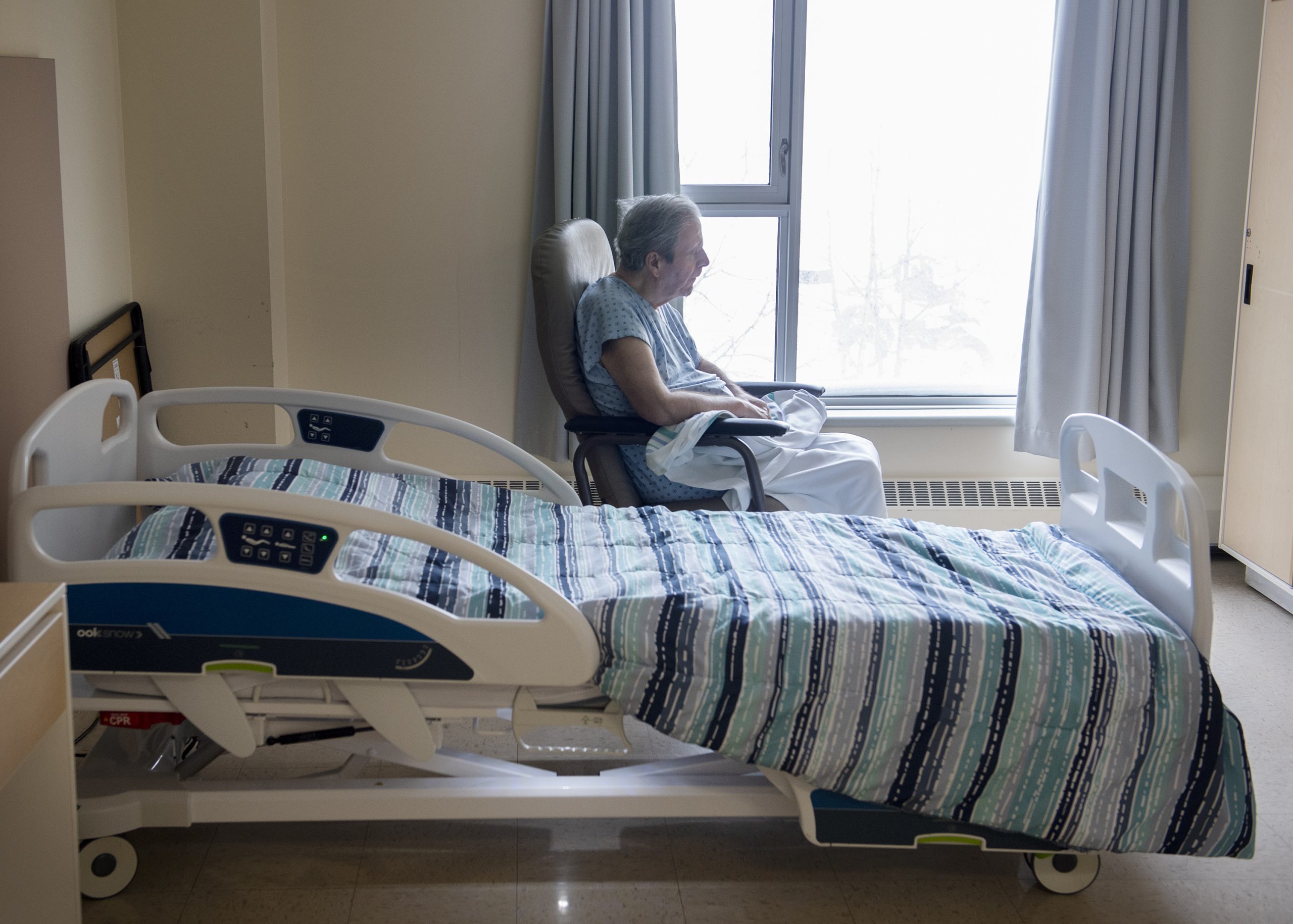
A resident sits in his room at Idola Saint-Jean long-term care home. Friday, February 25, 2022. THE CANADIAN PRESS/Graham Hughes
The province will also do away with 300 long-term care beds set aside for COVID-19 isolation by the end of this summer, with up to 1,000 more within six months.
Calandra said priority waitlists would not be affected by the changes, and no one would be kicked out of long-term care homes.
Do non-emergency paramedic services include at home?
The province will expand a pilot project that allows paramedics to avoid taking patients to the emergency department on every call.
The program allows paramedics to treat patients at home or take them to a different care centre.
The first phase of the paramedic pilot project was launched in 2020 with programs in more than 40 municipalities that allow paramedics to take patients somewhere other than an emergency room, such as a mental health facility, or to treat them on the scene.
Initial results show patients are accessing care 17 times more quickly, and 94 per cent didn’t go to the ER in the few days following care, Jones said.
Will more nurses be deployed to hospitals in need?
The province will temporarily cover the costs of applications, examination and registration fees for internationally trained and retired nurses.
Ontario also says it will modify a program that will allow nurses and nurse practitioners to be deployed full-time across multiple hospitals.
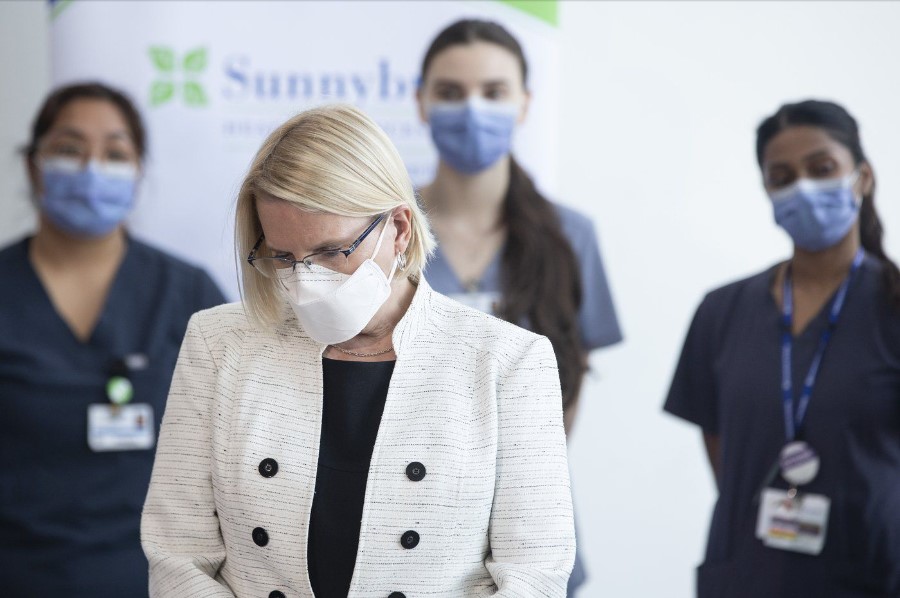
Ontario’s nursing regulatory college is proposing to register potentially thousands of internationally trained nurses on a temporary basis. Jones attends an announcement at Toronto’s Sunnybrook Hospital on August 18, 2022. THE CANADIAN PRESS/Chris Young.
Ontario’s nursing college proposed to register internationally educated nurses on a temporary basis, a move that could allow nearly 6,000 applicants to practice in the province’s hospitals amid a nurse staffing shortage that has led to temporary emergency room closures.
Health Minister Jones recently directed the College of Nurses of Ontario to develop plans to more quickly register internationally educated professionals within two weeks.
The college provided its response to the ministry Thursday and said there are 5,970 active international applicants currently living in Ontario.
How will this impact rural and northern emergency departments?
The province will also launch a new peer-to-peer physician to provide real-time support and coaching from experienced emergency physicians to help doctors deal with patients in rural emergency departments.
It will begin in five hospitals before being rolled out in up to 37 small and rural hospitals across the province.
The government is working with the College of Physicians and Surgeons of Ontario to expedite the registration process for those who want to work in northern and rural emergency departments.