Indigenous language program fosters reconnection with culture, identity
Posted September 30, 2022 7:06 pm.
Last Updated September 30, 2022 7:12 pm.
Among the countless horrors experienced by those forcibly admitted into Canada’s residential schools, punishment and abuse for speaking in their native languages was one that brings into sharp focus the attempts at stamping out Indigenous identity.
The Truth and Reconciliation Commission’s 94 calls to action include preserving and revitalizing Indigenous languages — a labour the language department at the Woodland Cultural Centre in Brantford has been performing for more than 35 years.
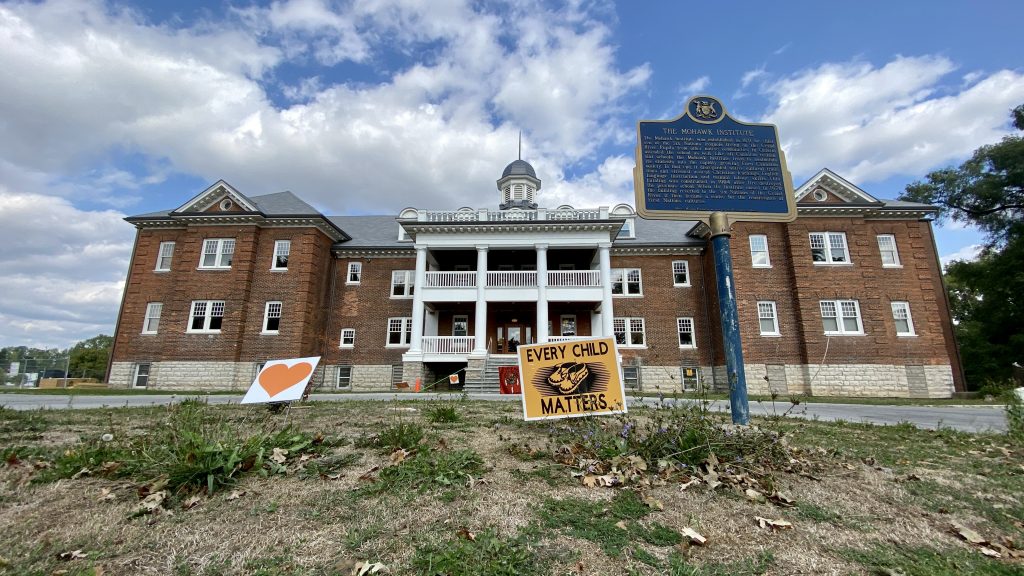
The centre is marking its 50th anniversary this year. It was built in 1972 on the grounds of the former Mohawk Institute residential school after it was shut down.
The organization works tirelessly with language speakers and learners, teachers and knowledge keepers to bring back to life First Nations languages that were nearly erased by European colonizers.
Executive Director Janis Monture explains that in the early years, the centre’s work mainly revolved around saving languages.
“The language director [at the time], Amis K. Junior, knew we were losing first language speakers. And so the goal was to start to ensure that we are saving their speeches, so they were starting to record them — which typically would not have happened — but we knew that it was really important that we had to do that. And then we also did a lot of work around translation and developing a dictionary,” she says.
Today, the centre offers language workshops and translation services and also develops resources like dictionaries and grammar books for all ages. They’re also creating audio and visual resources because she says the languages are largely oral and a written record would not capture the complexities of pronunciation and diction.
Since there are a number of grassroots introductory language programs in the community, they avoid replicating what is already available, but they’ve identified gaps that need to be addressed.
“Once you finish a language immersion program say at the adult level, if you get through two to three year programs, then how are you using that and how are you keeping it in your everyday life?” says Monture. “Those are things that we’re looking at … what other opportunities do they have to continue that learning process? That’s where we want to look at that lifelong learning model and that’s really what our goal is at the end of the day.”
The intrinsic link between language and identity
“If you don’t know your language, you’re missing a huge piece of your culture because it’s so intrinsic to everyday life, but also how you live and even our philosophies,” explains Monture.
“We’ve seen that through generational trauma caused by the residential school system and other colonial systems that when you cut off that access to language and being able to speak your language, it does cause problems with identity and even feeling that pride in oneself — because you feel like you’re missing something, you’re missing a piece of yourself.”
Language and cultural coordinator at the centre, Kaniehtenhawi Deer, adds that being unable to speak one’s language leads to a cultural disconnect.
“Sitting in ceremony and understanding what’s being said and knowing the origin stories and why we do these ceremonies — all of this gets explained when we attend ceremonies — but there’s a language barrier for a lot of our people,” she says. “That’s a key component that I feel would really help to bridge the gap that I see in my community and help people connect with their sense of identity as an Indigenous person.”
Language programming and outreach coordinator Jess Martin’s maternal grandfather was among the Indigenous children taken away from their families to the Mohawk Institute, where they were not allowed to speak their languages and punished for doing so.
“He was forcefully brought here and he was only here for two to three years before he ran away because of everything that happened in the school,” says Martin.
She adds that the atrocities committed at the residential school spread fear in the community that persisted for generations, further removing them from their language.
“[My grandparents], when they grew up and when they had kids … they didn’t teach or pass down as much of the language as they could because that fear was still lingering for such a long time,” she says.
She says the programming offered by the cultural centre can be transformational for Indigenous people.
“I think it can change the trajectory of a lot of our people’s lives. Like we deal with so many societal issues that stem from the residential school system and our language is like the missing piece of all the things that we’re seeking on our journeys.”
Language revitalization and reconciliation
Deer is passionate about not only preserving First Nations languages like her native tongue of Mohawk, but ensuring that their significance is recognized.
“I want to really bring a lot more awareness to our languages and our people as a whole within Canada — even the word Canada itself is derived from our languages. Even the word Toronto, Ontario. So for an entire country to be using a name that’s derived from our languages and our languages aren’t even recognized as real languages within Canada — that’s something that really gets me fired up,” she says. “Part of truth and reconciliation is recognizing those different aspects of our languages that are right in front of our faces — in our province names, our country names, our city names, our town names.”
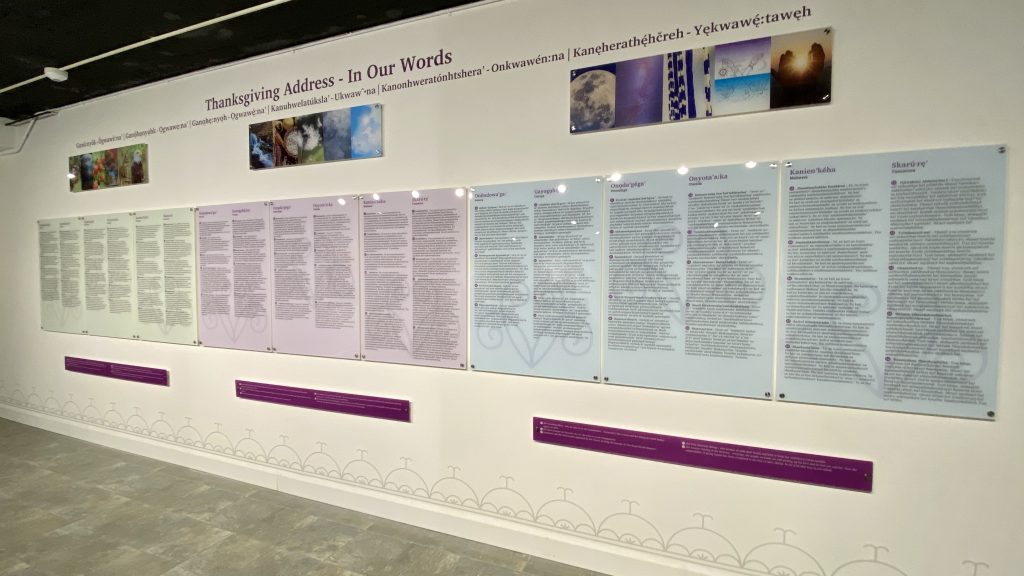
The Thanksgiving Address was translated into Seneca, Cayuga, Onondaga, Oneida, Mohawk and Tuscarora languages at the Woodland Cultural Centre. CITYNEWS/Dilshad Burman
Monture points out that the Truth and Reconciliation Commission recommended that Indigenous language programs receive increased funding to levels that would allow them to succeed and reach as many people as possible — with a goal of not only brining those languages back from the brink of extinction, but ensuring they thrive
“Right now, if you look at funding levels between, for example, French, that’s being taught in this country and the funding that’s going toward Indigenous languages teachings, it’s disproportionate. It’s way less than what they’re giving to French funding,” she says. “That’s sort of the work that the [Woodland] language department was doing for many years — advocacy about this.”
She adds if language revitalization is to truly be part of reconciliation efforts “we should be looking at funding languages and supporting language development in communities.”
Language programs inside the former residential school
The Woodland Cultural Centre’s language department is situated inside the Mohawk Institute.
Deer recalls a moment during a meeting where she felt the significance of reclaiming that space.
“I attended a meeting one day and I had to do the Thanksgiving address and by the end I was so emotional because I’m sitting in this building where our languages have literally been beaten out of these children, and here I am reciting a really key component of things that we do in ceremony that’s part of our culture,” she says. “I wanted to cry for the kids that didn’t get to do that. I felt really fortunate to be able to do that and that’s what I want to provide for other people — for us to be doing it directly inside of this building where all of these things happened is so powerful.”
Monture says while the institute is currently undergoing renovations, when it reopens in 2024, she hopes visitors will have an eye opening experience.
“The goal is that the tour will actually walk through the language center in a very unobtrusive way. We want [people] to be able to walk through and see us working and doing the work that we do in language,” she says. “I want visitors, when they come through the space, to also understand that our people are still here. We’re still very much active in our community and we’re still doing things to counteract what those residential school system policies did to our people.”
Most importantly, she says she wants Indigenous languages to echo through the halls where they were once forcibly silenced.
“I want those walls to hear our languages. I want them to hear our songs, I want them to hear our ceremonies. I want that in that space because it was not allowed for all these children over 142 years. So the goal is that those walls are going to hear it every day.”