High-speed rail project runs into rural opposition

Posted March 4, 2026 4:00 am.
Last Updated March 4, 2026 5:26 pm.
MONTREAL — Each day, Gord Boulton traverses the forests, lakes and clearings that house his hunting and fishing outfitting business.
A handful of camps dot the vast property, criss-crossed by deer, wild turkeys, beavers and bass. But Boulton can already picture that pristine scene punctured by a train barrelling down a track that could run through his property, severing it.
“It’s just going to roar right through the countryside and destroy it and bisect communities,” said Boulton, whose business revolves around the 1,000-hectare plot — about 1,400 soccer fields — in Battersea, Ont., northeast of Kingston.
Boulton was referring to a proposed high-speed rail line between Toronto and Quebec City. And he counts himself among the rural Ontarians and Quebecers behind a growing backlash to the project.
“I get people every day calling, and crying,” he said, a few weeks after launching a Facebook group named Save South Frontenac, the township where he lives.
“It was just shocking that this potentially could completely flip my life over and basically shut my business down and everything that my family enjoys doing.”
He’s not alone. A grassroots coalition of farmers, small-town residents and municipal councillors say the rail corridor would cleave their communities, prompt hundreds of land expropriations and offer locals few benefits while costing taxpayers billions of dollars.
In eastern Ontario, at least five townships and municipalities have passed resolutions opposing a would-be southern route to the line. At least one has come out against the other, more northerly option.
The Ontario Federation of Agriculture and Quebec’s Union des producteurs agricoles have called for suspension of the project. Several Facebook groups opposing it or giving voice to residents’ concerns have cropped up, with three of them garnering more than 14,000 members in total.
Alto, the Crown corporation overseeing the project, is weighing two possible corridors for eastern Ontario. One traces a direct line between Ottawa and Peterborough and the other arcs along a more southerly path.
Construction of the first phase of the 1,000-kilometre rail line is set to kick off in 2029 or 2030, linking Montreal and Ottawa in an effective test case for what would be a massive infrastructure project intended to transform rail travel in Canada’s most densely populated region.
The seven stops mandated by the federal government are: Toronto, Peterborough, Ottawa, Laval, Que., Montreal, Trois-Rivières, Que., and Quebec City.
Alto has said the benefits of the project range from greater economic output, job growth and tourism revenue to emissions reduction and safer travel. It has pledged to support local economies by hiring workers and buying materials from those areas during construction.
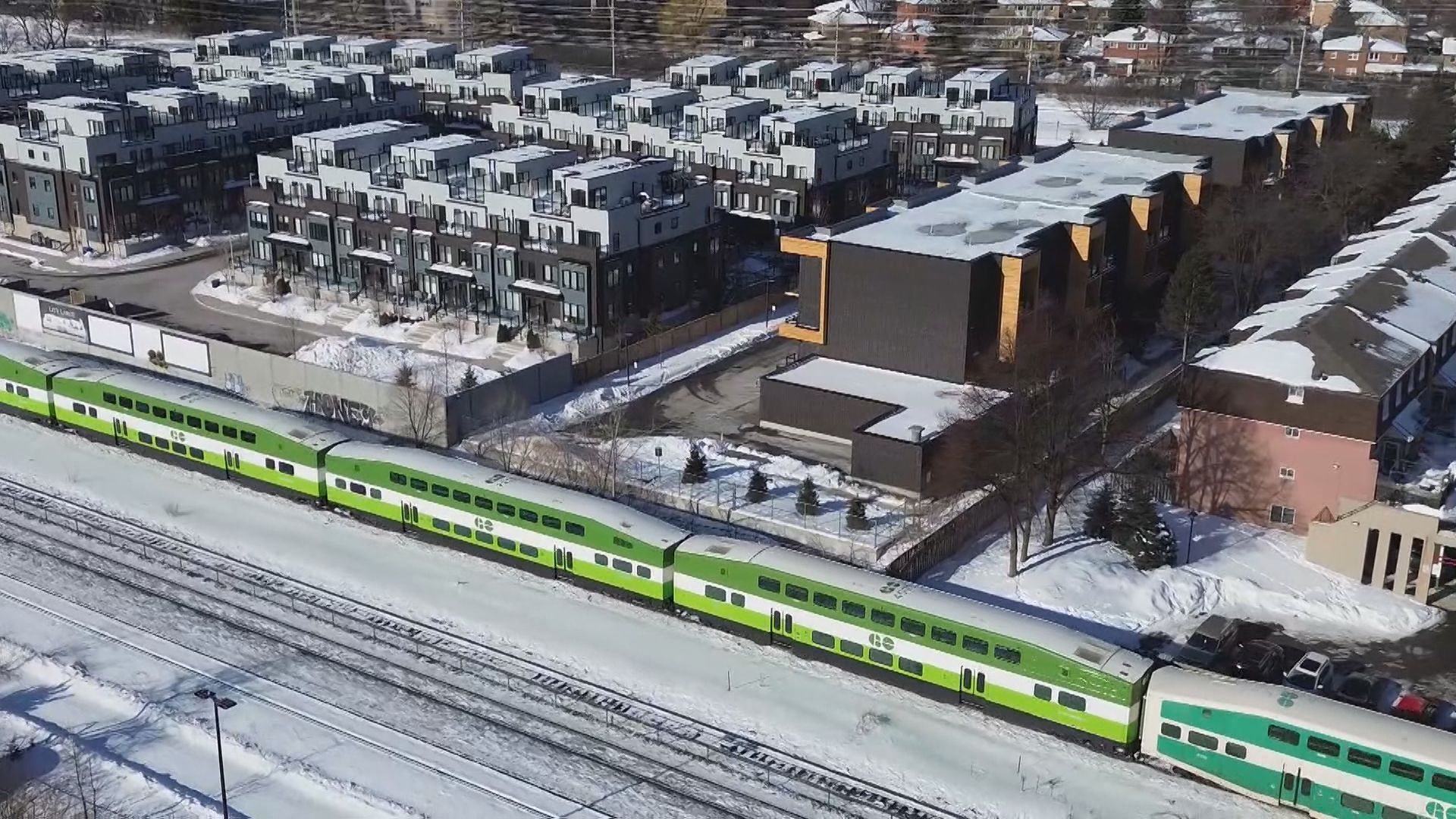
The proposed network would host 72 trains a day running on dedicated electric tracks at speeds of up to 300 km/h, slashing current travel times. It would make for a three-hour trip between Toronto and Montreal and less than one hour between Montreal and Ottawa.
CEO Martin Imbleau has acknowledged that some expropriations will be necessary, though he declined to give an estimate.
“Hopefully it’s not going to be a tool that is the predominant one,” he told reporters in January.
Spokesman Benoit Bourdeau said the line will follow “existing infrastructure corridors when possible.” For affected properties, tunnels and bridges could be built “in some instances.”
“Alto is very sensitive to the public’s concerns,” he said in an email.
The rough corridor mapped out by Alto is about 10 kilometres wide, but will be narrowed down to a width of 60 metres, the Crown corporation says.
Caroline Stephenson of Madoc, Ont., worries that the walled-off track will block country roads and create longer, bottleneck-prone drives for commuters and first responders, as the high train speeds rule out at-grade crossings.
“The school bus that picks up my neighbour’s kids is going to be longer. Every single movement that we make is going to be more difficult,” she said.
In Quebec, a long line of tractors rumbled through the streets of Mirabel north of Montreal last week as farmers protested the potential disruption to their lives and livelihoods.
“If your land is separated by a railroad … you’ve got to go five kilometres, 10 or more to get to your field on the other side,” said Stéphane Alary, a regional president of Quebec’s farmers union.
Many farmers will feel compelled to sell part of their plots to Ottawa as a result, he said.
“There’s a cost.”
Water management poses another concern. Some wonder whether channelling rivers and streams toward culverts will wind up draining private wells, which many rural residents rely on.
Wildlife and fish migration would be affected as well, part of the broader ecological impact of a ribbon of steel flanked by three-metre-high walls.
Alto says it will prevent any interruption to the use of wells and design the line “to limit its social and environmental impacts.”
Not all communities outside the major cities are opposed. Kingston city council last month voted overwhelmingly to support the project’s southern route — on two conditions: it must include Kingston as a stop and run along Highway 401 to steer clear of environmentally sensitive areas. Neither are part of the plan at the moment.
“I am convinced that there is a business case here,” said mayor Bryan Paterson, pointing to the additional revenue for Alto from “hundreds of thousands more potential riders” in the coming decades.
Otherwise, “it’s just a rail line going through our region that nobody can access,” he said.
Alto shut down the notion of route that traces the 401, whose turns veer more sharply than the “very gentle curves” needed for high-speed trains.
“The 401 isn’t a practical option,” said Bourdeau.
Alto estimates the full project will cost between $60 billion and $90 billion. The government has not yet made a final decision approving funding for the entire rail line.
Public consultations in roughly two-dozen communities kicked off in mid-January. They are set to wrap up at the end of the month.
For Michael MacGillivray, who raises cattle, pigs and chickens on an organic farm in North Glengarry, Ont., the “dampening effect” is already underway, brought on by uncertainty over the final route.
“You really can’t plan,” he said.
Farmers are postponing potential expansions, acquisitions and facility upgrades on tracts that might be effectively out of reach after the railway rolls through, he said.
“The rural residents are the ones that are going to bear the burden of this.”
This report by The Canadian Press was first published March 4, 2026.
Christopher Reynolds, The Canadian Press