Need for more radar training, stronger building code cited year after Barrie tornado
Posted July 15, 2022 6:18 pm.
Last Updated July 15, 2022 7:36 pm.
It’s been a year of recovery and building for dozens of south Barrie residents following an EF-2 tornado, but questions still linger about what more could have been done to help minimize damage in and around the community as well as boost overall preparedness
“A lot of houses lost their roofs, and so it was a really significant tornado,” Gregory Kopp, a civil and environmental engineer with Western University and a spokesperson with the Northern Tornadoes Project, told CityNews in an interview.
“Our engineering calculations tell us that if the houses had been built to code, we would have lost fewer roofs in this tornado.”
Kopp and his colleagues at the project are on the front lines of gathering data about all tornadoes in Ontario, saying the need is greater than ever in order to better understand the risks facing the province.
“When wind acts on a house or building, it wants to lift the roof up. So we’re often looking at how did the roof get held down and the strength of those nails and the fasteners to the walls and the walls to the foundation.”
They were on the ground in Barrie after the tornado touched down at around 2:30 p.m. on July 15, 2021. The neighbourhood near Prince William Way and Mapleview Drive East was particularly hard hit.
Significant damage in #barrietornado, but some of it was preventable. Missing roof-to-wall connections (nails) allowed a roof to slide off the walls of this house. This is an issue of construction quality and does not meet the building code pic.twitter.com/4jruaThNL0
— Gregory Kopp (@gregoryalankopp) July 16, 2021
At the time, Kopp posted stunning revelations on his social media. In one instance, he found the entire roof structure shifted on top of a home.
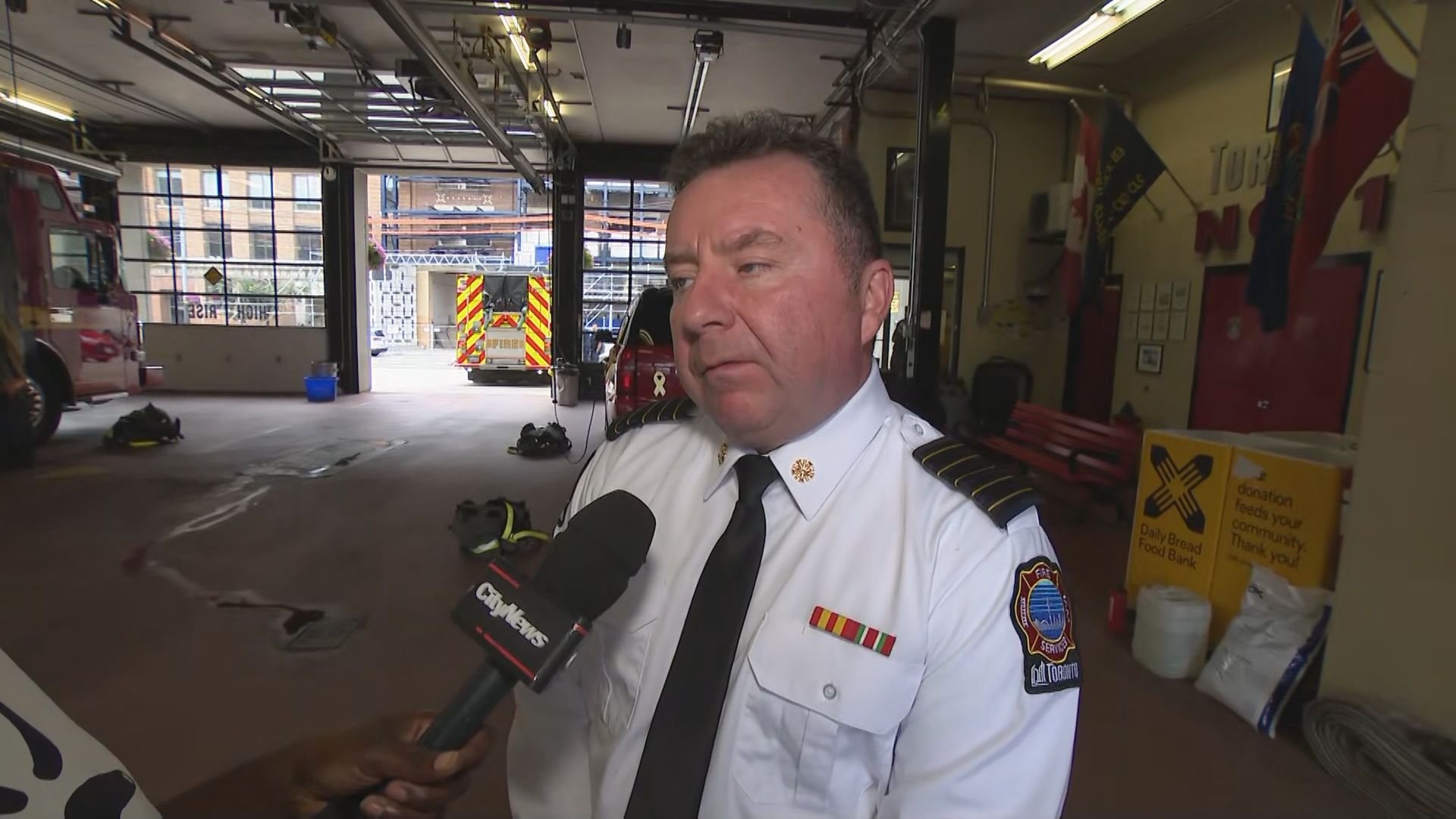
Michael Janotta, the City of Barrie’s chief building official, told CityNews he and his entire department were on the ground for 24 hours after the twister struck.
“When you see portions of the roof ripped off, the roof is a tremendous stabilizing force in a building, and when the roof is gone, the building is not safe,” he said in an interview.
“The devastation was incredible, and I’ve never seen devastation like this in my career.”
Janotta said he and his team conducted inspections for four hours after arriving that afternoon, and in the end, they issued 70 unsafe orders.
“Our role at that point as building officials is to make nobody is going into a house that could be unsafe, so the last thing we want to see is we have these houses ripped apart and then someone’s going in there and there’s a further injury,” he said.
The legal orders triggered a cascade of engineers’ reports to advise what would be done to make the homes safe. Seven of the properties needed full or partial demolition permits.
It’s estimated the tornado had winds just shy of 200 km/h and travelled more than 12.5 kilometres (roughly Highway 400 and onto Lake Simcoe). If it tracked 300 to 400 metres south, it would have mainly travelled over fields. No one died, and nearly a dozen people were injured.
Joanne St-Couer, a director with the Meteorological Service of Canada at Environment and Climate Change Canada, oversees weather prediction services in Ontario.
RELATED: Homes still being repaired one year after damaging Barrie tornado
CityNews spoke with St-Couer to follow up on questions raised after some residents reported getting the tornado warning during or after it passed. However, the forecaster said earlier in the day, conditions were ripe for a twister.
“There were multiple cells … the cell over Barrie was not the most threatening one at the time,” St-Couer recalled, noting the cell developed and progressed rapidly.
“That cell was one that developed and then progressed really rapidly into a severe thunderstorm and then obviously had the ingredients to spawn a tornado that was that violent within minutes.”
She confirmed that staff on duty need more training after an upgraded radar system was installed in King City as part of a national upgrade. The new radar station is able to conduct scans every six minutes instead of every 10, providing more timely data. It came online just a couple of weeks before the tornado touched down.
St-Couer also said back-end, radar-related algorithms reducing on-site staff capacity due to COVID-19 were also factors in how things unfolded that day.
“The nature of the storm and the nature of the phenomenon like a tornado it is very much so quick in development and in timing that every little second counts, so I’m hoping with the investment that we did and the training that we did that we put all our chances on our side,” she said.
“But there’s always going to be events that are going to be unexpected or difficult to forecast or be seen on radar.”
She said when it comes to actually issuing a warning, meteorologists have to be as sure as possible in order to ensure alerts are accurate.
“You have to make a quick decision based on believing the information and having the confidence to issue those, and recognizing the pattern,” she said, encouraging people to pay attention to the messages contained in various watches and warnings.
“We try in the hours before to identify the days we have the possibility of a thunderstorm or a tornado.”
Meanwhile, when it comes to protecting homes, Janotta and Kopp are on a mission to see Ontario’s building code changed. It currently has regulations to protect loads from causing dwellings to collapse.
“What happens in a tornado is the loads are going the opposite way, they’re going upwards and not downwards. The code doesn’t currently contemplate that type of resistance,” Janotta said.
Staff with the City of Barrie put forward a proposal in May that calls for changes such as the installation of hurricane straps (sometimes referred to as hurricane clips). The devices, estimated to cost $200 to $300, secure roofs to walls in a much stronger way. They noted roof debris is a major cause of death, and gusts carrying roof debris can cause damage downwind. Also, if a roof is ripped apart, often it leads to the walls collapsing.
“As an engineer, this is a life-safety issue to me,” Kopp said, reiterating it’s also a good preventative measure.
“It’s one thing to replace your shingles and some sheathing and broken windows, it’s another thing to have a whole house rebuilt. I’m sure a lot of those people if they have the choice now they would have loved to have hurricane straps on their houses.”
They also called for beefed-up rules surrounding exterior sheathing and changes to how it’s installed (such as better bridging the connections of wood members). Janotta said by transferring some of the building’s load down to the foundation, it can provide resistance to uplift and help better protect homes during extreme weather.
“I think we’re at the point, in my view, where we need to start dealing with them,” he said, referring to an increase in events along with changes in our climate.
“That’s just nails and a little bit more labour.”
Like Janotta, Kopp acknowledged it will take a lot of effort to change the current practices — especially when it comes to housing affordability.
“It’s that trade-off between initial cost and the lifetime cost,” he said.
“That house is going to be there for 50 to 100 years, so as a society if we’re paying for the repairs after the events we somehow have to resolve this issue.”
CityNews contacted the Ontario Ministry of Municipal Affairs to ask where the proposal stands.
“We are actively collaborating with the City of Barrie to complete their code change proposal and have also started engaging with the National Research Council on how the national construction codes and Ontario Building Code can be improved with better hurricane and tornado wind impact protection requirements moving forward,” a spokesperson said in a brief statement.
Much of the damage can be mitigated in EF2 tornadoes by adding hurricane straps to hold the roofs down, and improving certain nailing patterns. @ICLRCanada estimates a few hundred dollars per house for new construction. I hope the houses in Barrie are re-built with these. https://t.co/JgilBMHW4Z pic.twitter.com/snUbJSyXjE
— Gregory Kopp (@gregoryalankopp) July 16, 2021