Paramedics feeling health care strain exacerbated by Omicron
Posted January 9, 2022 7:21 pm.
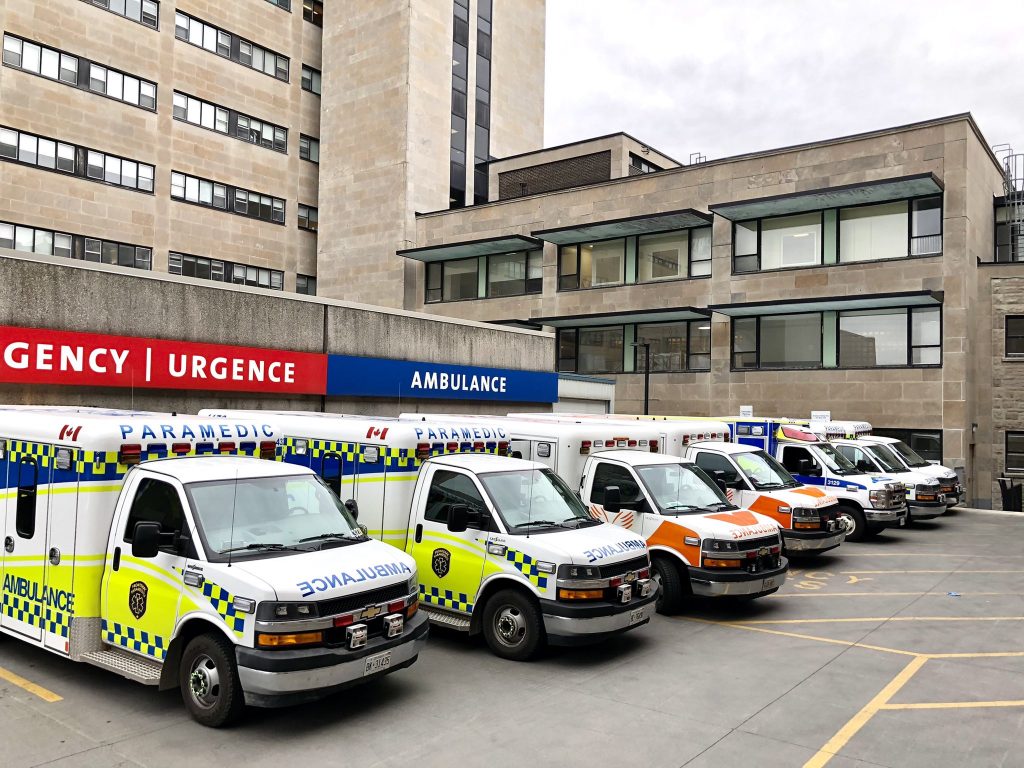
Staffing shortages at hospitals and other frontline settings due to the rapid spread of Omicron are having a trickle-down effect to other health-care services, including paramedics.
A union representing paramedics in Toronto tweeted a “Code Red” alert on Saturday night, saying there were no response units available in the city around 7 p.m.
#CodeRed No units available in the City at 18:38 hours tonight.
— TO Paramedic Union (@416TPSUnit) January 9, 2022
TPS Unit Local 416 vice chair Peter Shirer didn’t know how long the status lasted, but called it a symptom of a decade-old problem that’s now being exacerbated by Omicron.
Shirer estimated 10 per cent of Toronto paramedics may currently be isolating. That, coupled with an increase in virus-related call volume, has taken its toll.
“There’s a lot more pressure with us servicing calls right now in the fifth wave of a two-year-long pandemic,” he said, adding that while he didn’t have statistics on how often code reds are called, “it certainly seems anecdotally that we have a higher incidence of greater strain on the medics I represent.”
Brad Ross, chief communications officer for the City of Toronto, said in an emailed statement that it’s not uncommon for all ambulances to be on call one moment and freed up the next.
Ross said Toronto Fire Services has been responding temporarily to a number of low-priority calls. But if a patient needs a paramedic, Toronto Fire will call for them.
“There remains significant pressure in hospitals resulting in paramedics being delayed with off-loading patients,” Ross said. “This issue is unfortunately common right now around the world.”
Toronto’s paramedics aren’t the only ones dealing with recent Omicron-related strain.
Durham Region tweeted on Wednesday that there were “no ambulances on the road” at one point on Tuesday, with crews from York and Kawartha Lakes brought in to respond to two calls.
Dr. Mike Haddad, Chief of Staff at Bluewater Health in Sarnia, Ont., said his hospital is currently seeing higher levels of COVID-19 admissions than at the peak of the first wave in April 2020.
The hospital’s previous record was 33 COVID-19 patients at one time, a figure surpassed Sunday when its 34th was admitted. Eleven of those patients are battling severe disease in ICU – “many of them on life support,” Haddad said – noting 10 of them are unvaccinated.
“What worries us is all the talk about (Omicron) as a milder variant, that’s great. But even though it’s milder, there’s so many more infections that the balance is basically washed out,” he said. “We’re back to Square 1 in terms of having a dedicated COVID unit again, ICU’s full of COVID, surgeries cancelled, surgical staff redeployed to help deal with this.
“So to us, milder or not, it’s the same detrimental effect on the health system.”
Vaccines have been working exceptionally well to reduce hospitalizations and deaths, Haddad added, noting that with thousands of COVID-19 cases in his community, his hospital would have been “completely overwhelmed” without them.
“That’s the one thing people don’t think about,” he said. “They look at how many in the hospital are vaccinated or unvaccinated, but imagine if nobody was vaccinated in the community – our numbers at the hospital would be astronomical.”
Haddad said that while his staff has remained in high spirits, they’re exhausted by Omicron’s incessant spread. Roughly five per cent of them are currently isolating after an infection or high-risk exposure