REVIEW: A Christmas Story Christmas, an unnecessary sequel

Posted November 17, 2022 6:34 pm.
For the past 40 years, a Christmas Story has been held up by many as a classic of Christmas movies. Countless amounts of people have turned to the adventures of Ralphie Parker and his family every year since the film’s release in 1983 for their Christmas celebrations. While there already was a sequel that came out 10 years ago, fans of a Christmas Story finally have a sequel with the original Ralphie himself (Peter Billingsley from Death Valley).
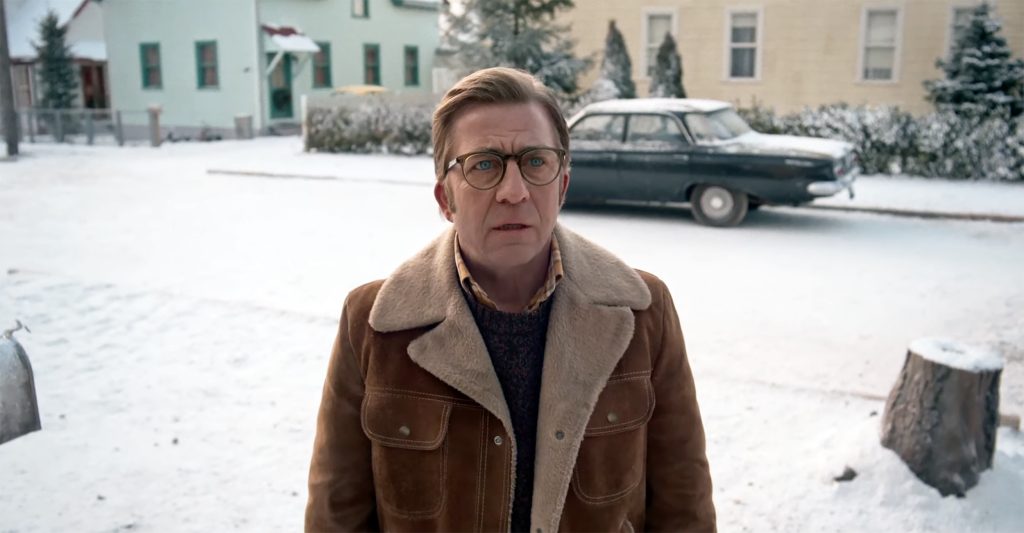
Peter Billingsley in A Christmas Story Christmas, courtesy of Warner Bros.
A Christmas Story Christmas picks up about 30 years later, with Ralph now married with two children of his own. He has dreams of becoming a famous sci-fi author, and is looking forward to spending a quiet Christmas with his wife (played by Erinn Hayes from Childrens Hospital) and children. But he receives a tragic call from his mother (played by Julie Hagerty from Marriage Story and Lost in America) saying that his father has died. Ralph packs up the family, heads home to Hammond, Indiana, and gets ready to prepare a spectacular Christmas just like the ones his father did.
If you were looking forward to this film, or you’d always hoped that they’d make a sequel to a Christmas Story, you will probably get a kick out of this. The film is essentially a remake and a love letter to the first one, showing us constant flashbacks and showcasing little tributes to the first film. This film coasts along the nostalgia the first one has created, to the point where it feels like it lives in a memory. And if that’s something you’d like to see, more power to you.
But that same exact reason is why a Christmas Story Christmas is bad. This film is less of a sequel, and more of a requel (a remake masquerading as a sequel). While the focus is on the adult version of Ralph and he doesn’t want a toy that will shoot his eye out, he’s still chasing a dream that many acknowledge could cause him more harm than good. He took time off work to focus on writing his first novel, causing his family to undergo financial hardship.
And when him and his family return home, the film turns into constant flashback/homage/reference to the original. This sequel doesn’t really get the chance to stand on its own, because it spends the entire film stuck in the shadow of the original. This is compounded not only by the returning Billingsley, but by other actors who played children in the original returning as well. The dynamics between several of the returning actors are eerily similar, the only actor who is allowed to show character growth is Zack Ward (from Postal), who plays the grown up and matured version of the child that bullied Ralph.
The film doesn’t show these characters moving on, or in a new situation. It’s another Christmas, just like the first one. While the narrative doesn’t follow the original to a tee, it does play eerily similarly. A Christmas Story Christmas doesn’t feel it was written by people who had something to say. Instead, it feels like a market-tested product meant to broadly appeal to many, and specifically appeal to none.
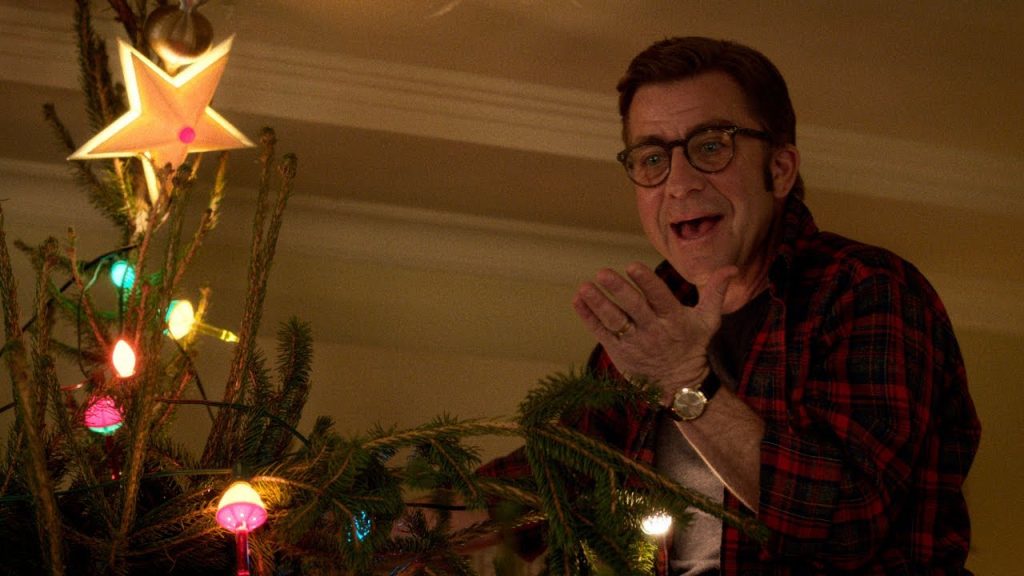
Peter Billingsley as Ralph Parker in A Christmas Story Christmas, courtesy of Warner Bros.
Watching this feels like a memory exercise, just trying to see how much you can remember from the first film. And being a Christmas film as well, it’s already part of an incredibly capitalist genre. If the spirit of Christmas (as in being with your family, having gratitude for the people in your life) is important to showcase, why do it in such a capitalist art form? Why not make art to give out to everyone for free? Film is the defining capitalist art form, one that is based around the cycle of money. And Christmas films are the most obvious example that film is a capitalist art.
Christmas began as a holiday to celebrate the birth of Jesus Christ, and it evolved into a celebration of closeness with your family. But as capitalism grew, so did its desire to take over Christmas. Now Christmas is more about the gifts, the wrapping, all the flavours that only be bought at this time of year. Christmas has evolved into a red and green dollar sign, and Christmas films are just another way to get that red and green dollar flowing.
This is a film that can’t stand on its own, because its entire premise is leaning on the first one. Being that the first film is already part of a genre so obviously trying to make money, it rings hollow and desperate. If you think you’ll like this film, more power to you. But this is a bad film that only exists to capitalize on the iconography of Christmas. You can watch this film on Crave now.