5 planets will be lined up in night sky this week. How and when to spot them
Posted March 28, 2023 12:21 pm.
Last Updated March 28, 2023 1:28 pm.
There will be a celestial treat tonight when five planets — Mercury, Jupiter, Venus, Uranus, and Mars — will be lined up near the moon.
NASA astronomer Bill Cooke says for a short window on Tuesday night, the five-planet spread will be able to be viewed from anywhere on earth, as long as there’s a clear sky and you have a west view.
Mercury and Jupiter will dip below the horizon about 30 minutes after sunset at 7:39 p.m. in southwestern Ontario tonight. Mars will be very close to the first quarter moon on Tuesday, astronomers say, adding that Venus, Mars and Uranus are somewhat easier to find as Venus is bright in the evening skies.
Binoculars are likely needed to spot Mercury and Uranus, as they’re dimmer planets. This kind of alignment happens when the planets’ orbits line them up on one side of the sun from earth’s perspective.
“Find a nice view towards where the sun is setting. A nice low horizon. Obviously, it has to be clear out,” said Randy Attwood of the Royal Astronomical Society of Canada. “Binoculars help to spot these, but you can see the brighter ones with your eyes when it gets dark.”
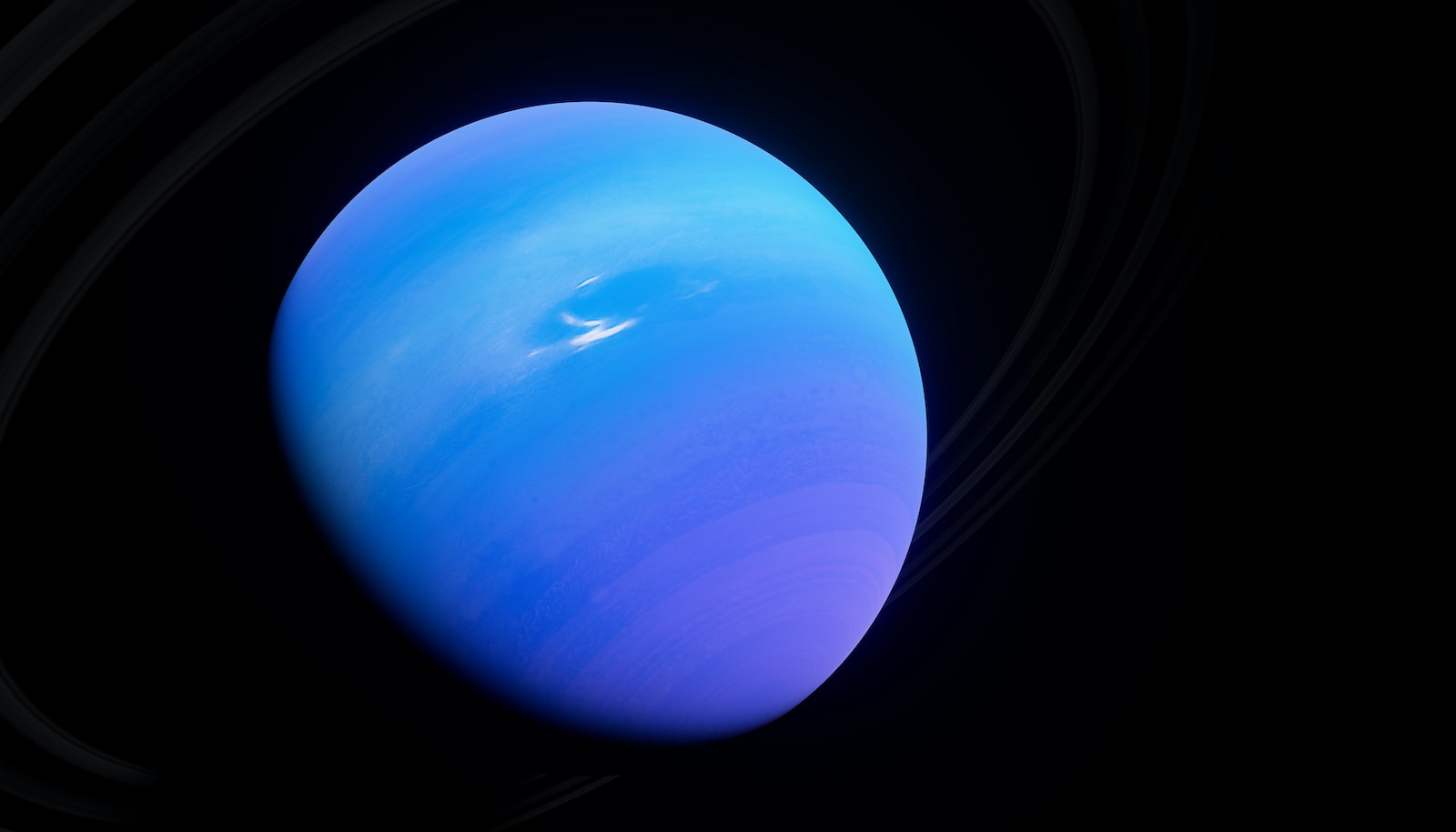
A photo of Uranus. Photo credit: Planet Volumes.
If you’re a “planet collector,” NASA’s Cooke said it’s a rare chance to spot Uranus, which usually isn’t visible. Look out for its green glow just above Venus.
Different numbers and groups of planets line up in the sky from time to time. There was a five-planet lineup last summer, and it will happen again in June, though with different planets.
Next year, the Canadian Space Agency will announce which Canadian astronaut is joining the crew of Artemis II, which is expected to launch in 2024. That move will make Canada the second country in the world to have a human go into deep space.
NASA says the approximately 10-day mission “will test and stress the Orion spacecraft’s life-support systems to prove the capabilities and techniques required to live and work in deep space in ways only humans can do.”
With files from The Associated Press and Eva Fragiskatos of CityNews 680