Toronto police charge Hamilton man in 2006 cold-case homicide after breakthrough DNA match
Posted July 30, 2026 5:36 am.
Last Updated July 30, 2026 11:36 am.
Toronto police have arrested a Hamilton man in connection with the 20‑year‑old homicide of 21‑year‑old Patrick Santos, a case investigators say was solved through cold‑case work and modern forensic technology.
Santos was found dead on Sept. 17, 2006, in the backyard of his father’s Scarborough home, located in the area of Ellesmere Road and Bellamy Road. His hands and feet were bound, and tape was wrapped around his head. The cause of death was asphyxiation. Santos’ killing became Toronto’s 49th homicide of 2006.
At the time, police said Santos was last heard from around 4:30 a.m., speaking with his girlfriend by phone while returning home from a downtown nightclub. Hours later, a 911 call brought officers to Bridlington Street, where Santos was discovered with severe trauma and pronounced dead at the scene.
On July 29, 2026, members of the Toronto Police Homicide and Missing Persons Unit arrested Pierre O’Connor, 43, of Hamilton, charging him with first‑degree murder in Santos’ killing.
“We know that the accused has been residing in Hamilton. We also believe more than one person was involved in this murder,” said Detective Sergeant Stephen Smith of the Homicide and Missing Persons Unit on Thursday.
“Patrick was a grown man. For him to come home and be physically overtaken by one person, without being able to call for help… we believe there was possibly more than one person there in order to take physical control of him and not alert anyone else that he was being physically abducted.”
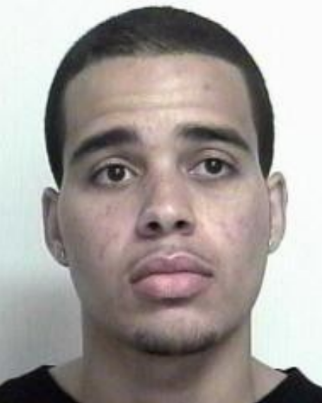
An image of the accused taken in 2003 and a current photo from 2026 have been released by police.
Cold‑case DNA and investigative genetic genealogy
DNA was collected at the scene in 2006, and investigators said a profile was developed. But at the time, authorities said there was no match in the National DNA Databank, and no suspect was identified.
In 2020, police submitted the DNA profile for Investigative Genetic Genealogy (IGG) with assistance from OTHRAM Inc., a private lab specializing in advanced forensic genealogy. While the IGG process did not directly identify a suspect, police say it generated new investigative leads that helped narrow the field.
By 2025, detectives in the Cold Case Section had identified a person of interest. They obtained a DNA sample from the suspect, and forensic testing confirmed a match to the DNA left at the scene in 2006.
Santos’s mother, Juliet, has spent 20 years pleading for justice and struggling with the loss of her son, whom she described as kind and helpful.
“I asked God why would someone hurt my son,” she told CityNews in 2024.
Smith acknowledged the arrest brings long‑awaited answers to Santos’ loved ones.
“Patrick was a young man. He had a job, a future ahead of him, and plans to move into his own place with his girlfriend,” Smith said. “While nothing will ever bring Patrick back to his family, today we can say that the person alleged to be responsible for taking his life has been identified, arrested, and will now have to answer for this crime before the courts.”