Partial lunar eclipse to be visible in Canada Thursday night
Posted August 27, 2026 12:39 pm.
A partial lunar eclipse is happening overnight Thursday into Friday and Canadians will be among billions of people able to catch a glimpse of it.
Almost the entire lunar surface will be masked Thursday night into Friday — a whopping 96 per cent — making this an especially deep partial eclipse.
The partial eclipse is expected to last three hours and 18 minutes, beginning at 9:23 p.m. ET and will peak around midnight in Ontario. However, the entire eclipse will take around five and a half hours.
The eclipsed moon will be visible to billions across North and South America, Europe, Africa and the Middle East, provided the skies are clear.
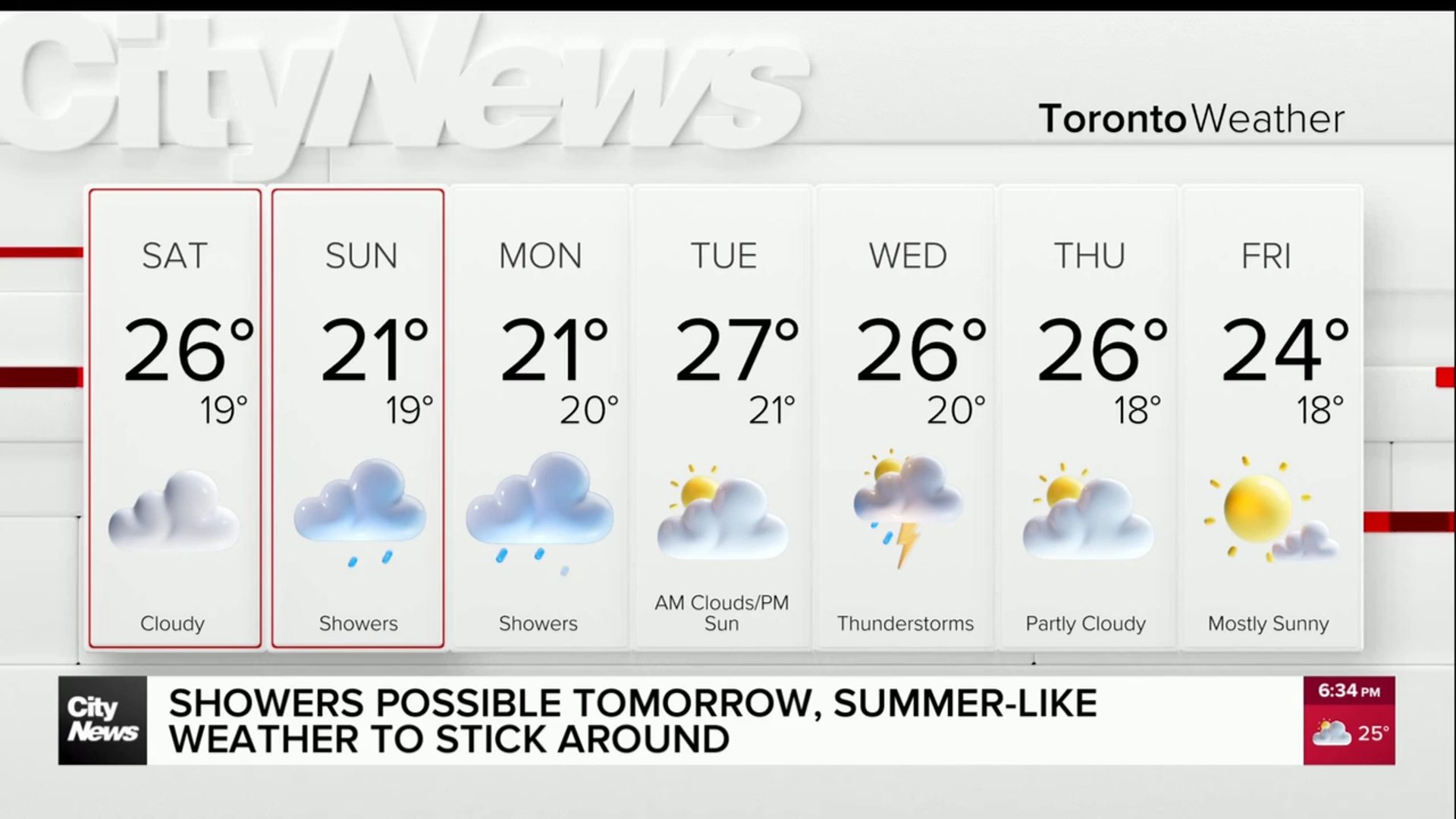
680 News meteorologist Rob Haswell said Toronto will see partly cloudy conditions in the late evening and overnight, slightly affecting our view.
“Viewing might be partially obscured but if you get away from the lights of the city, you should get a decent view of the show,” Haswell said.
What is a partial lunar eclipse?
According to NASA, a partial lunar eclipse is an “imperfect alignment” of Sun, Earth and Moon. During an eclipse, two shadows are cast. The first is called the umbra, which means the shadow gets smaller as it goes away from the sun. It is the dark center of the eclipse shadow.
The shadow grows and then recedes without entirely covering the moon.
It’s the second act of the greatest show in the solar system, coming two weeks after a total solar eclipse paraded through Greenland, Iceland and Spain.
Eclipses always travel in pairs as the sun, moon and Earth align so precisely that one obscures the other. That’s because the moon is 400 times smaller than the sun, which is 400 times farther away, making them appear the same size — a cosmic coincidence and gift from the universe.
Will there be another eclipse this year?
This is the year’s second and final lunar eclipse and the fourth eclipse overall. A total lunar eclipse graced the skies over the Americas, Australia and eastern Asia in March.
The next partial lunar eclipse won’t happen until Jan. 12, 2028, but there will be three penumbral eclipses in 2027.
The next complete lunar blackout won’t be until New Year’s Eve 2028, with Asia and Australia at centre stage. And it will be 2029 before stargazers across North and South America are treated to another full eclipse of the moon.