Toronto endures coldest winter day since January 2019
Posted January 21, 2025 8:29 am.
Last Updated January 22, 2025 6:39 am.
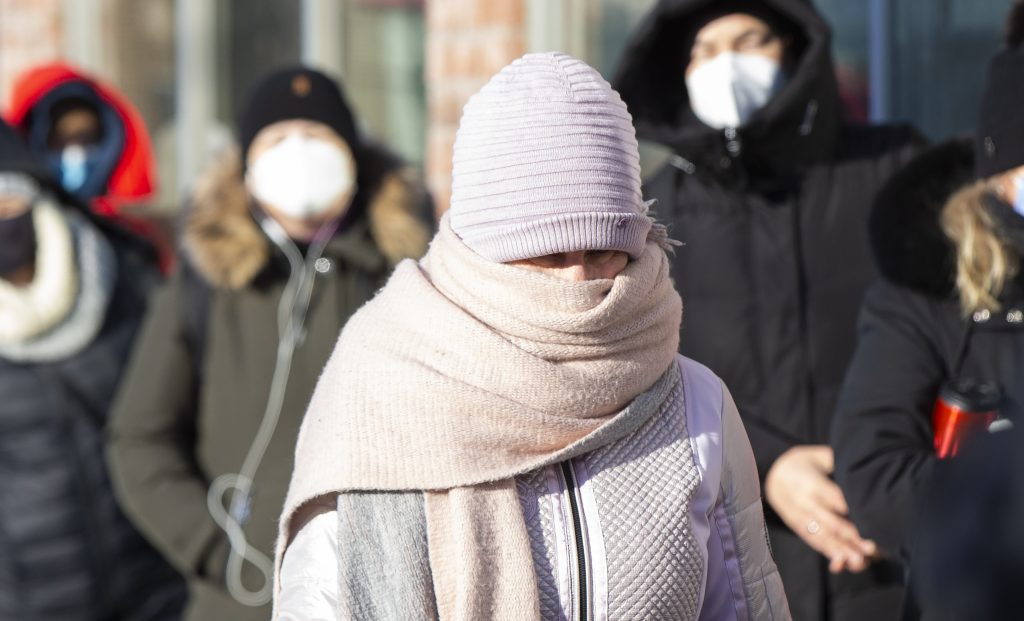
Environment Canada issued an extreme cold warning for Toronto and the GTA on Tuesday, calling for windchill values near -30 to as low as -35.
“An Arctic airmass will bring bitterly cold wind chills to the area tonight. Temperatures will moderate Wednesday afternoon,” Canada’s weather agency wrote online.
According to criteria posted on Environment Canada’s website, an extreme cold warning for southwestern and south-central Ontario is issued when the “temperature or wind chill is expected to reach minus 30C for at least two hours.”
The Arctic air mass continues to grip much of Ontario in a deep freeze, intensifying powerful lake-effect snow squalls, resulting in Environment Canada issuing extreme cold warnings for parts of southern Ontario, including Hamilton, Guelph, Windsor, London, and Barrie.
Daytime highs remained in the minus teens for these areas, and windchill values near -30.
Though we’re less than a month into the new year, the daytime high of -12 C in Toronto was the coldest on record since January 2019. By nightfall, temperatures dropped to the -20 C mark, feeling more like -30 C.
Some Southern Ontario regions, including the Bruce Peninsula, Owen Sound, Bracebridge and Gravenhurst, were forecasted to receive more than 40 cm of snow accumulation from the latest lake-effect snowfall event, lasting through Wednesday.
Signs of frostbite during extreme cold
By Wednesday morning, Toronto residents awoke to bitterly cold temperatures at -18 C. The next round of snow is forecasted for then, too, as there is a chance of accumulation in the 1-3 cm range by Thursday morning.
The extreme cold also comes with the risk of frostbite, which increases significantly when the wind chill makes it feel colder than the air temperature. The longer the skin is exposed to the cold, the higher the risk. Even at temperatures just below freezing, prolonged exposure can lead to frostbite.
At -15 C with wind chill, frostbite can occur on exposed skin in as little as 30 minutes. It’s crucial to dress in warm layers, protect exposed skin, and avoid prolonged exposure to the cold in extreme conditions.
Colder-than-average temperatures are forecast to persist into late January. As February begins, milder air is expected to push north of the border.
Click here to sign up for the CityNews Weather Guarantee and for details on the extended forecast.