Toronto roads ‘destroyed’ by winter as city rolls out massive pothole blitz
Posted February 25, 2026 7:46 am.
Last Updated February 25, 2026 4:29 pm.
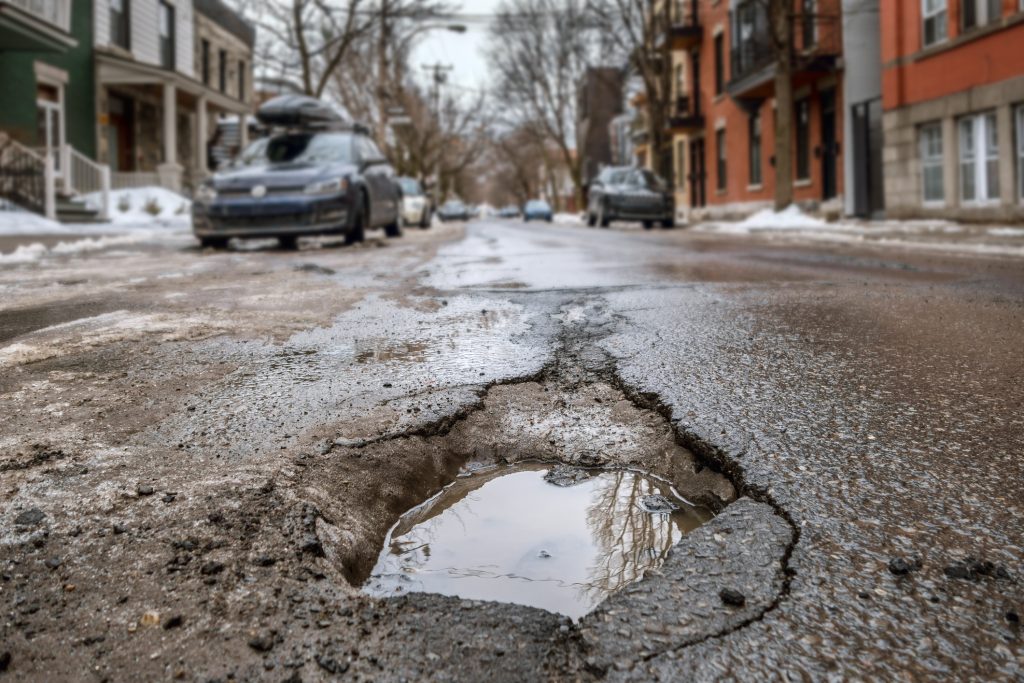
Toronto is launching an aggressive pothole repair push this week, with Mayor Olivia Chow announcing that 29 city crews are already out patching roads after one of the harshest winters in recent years left streets cracked, cratered, and increasingly hazardous for drivers.
“I understand the frustration drivers feel, the damage potholes can cause,” Chow said Tuesday, noting that fluctuating temperatures and repeated storms have created ideal conditions for widespread road deterioration. “Mother Nature hasn’t given us a break, but as soon as there is an opportunity, City crews will do a blitz.”
As of Monday, the city has received 1,194 pothole claims – a 47 per cent increase from the same period last year.
It says claims for damages due to potholes are higher than normal due to winter conditions, and resolutions may exceed the city’s 90-day target.
Brian Pirvu, a government relations consultant for the Canadian Automobile Association, said it’s not unusual to see an increase in potholes on the roads around late winter and early spring.
“In terms of overall trends, it’s been a quite normal or slight increase, but still a continued priority,” said Pirvu.
“What happens to the asphalt is moisture gets caught, it freezes, and then that freezing and melting process tends to make the asphalt break apart. Once that snow starts to clear later on in March, you’ll start to see more of those potholes resurface due to that freeze and thaw cycle.”
This year’s winter has been particularly punishing, with extreme cold snaps followed by sudden warmups and heavy snowfalls. City data shows pothole volumes typically spike during these conditions, and officials say 2026 is shaping up to be another high‑demand repair season.
Pirvu noted the cost of pothole damage on cars can range from $500 to $2,000. Drivers should exercise caution when driving near potholes, and ensure their cars are well-maintained to avoid extensive damage, he said.
“If you are approaching a pothole, try to lower your speed and don’t necessarily brake right when you hit the pothole. Allow the car to absorb the damage,” said Pirvu.
Drivers whose cars are damaged by a pothole in Toronto can submit a claim by filling out a form on the city’s website. The claim must be made within 10 days of the incident.
The city says its insurance adjusters investigate each claim to determine if the municipality is responsible for the damages.
Chow increases city’s pothole repair budget for 2026
In 2025, Toronto filled more than 250,000 potholes, a figure that peaked in 2024, when city crews filled more than 280,000. According to city data, from Jan. 1, 2026, to Feb. 25, 2026, the city has repaired just over 23,000 potholes; more than 33,000 were repaired during the same timeframe in 2025, and over 47,000 were fixed in 2024.
Chow said she has increased the pothole repair budget from $5.5 million to $6.2 million for 2026, allowing for more crews, more materials, and faster response times.
According to the city, crews repair potholes year‑round when weather allows, but blitzes like Tuesday’s are timed to take advantage of brief windows of dry, above‑freezing conditions. Crews generally repair potholes within 15 to 20 minutes, the city said, but during winter months when asphalt cools quickly, they’re temporarily patched with cold mix asphalt to make the street safe. When the weather is warmer, the city makes more permanent repairs with hot asphalt.
The city said potholes in higher speed and high-volume roads are repaired more quickly than those on side streets. It aims to repair potholes on the busiest roads within four days, compared to 30 days on side streets.
Chow urged residents to help identify the worst‑affected areas.
“Please report potholes to 3‑1‑1 so we can continue tracking and prioritizing the worst roads.”
Files from The Canadian Press were used in this report